
When the rain starts falling—hello, sudden Singapore downpour!—and cabin fever kicks in, it’s tempting to default to screens or snacks to get through the day. But with a pile of couch cushions and a little imagination, you can turn your living room into a toddler-friendly movement playground—and build critical brain skills in the process.
Welcome to the Couch Cushion Olympics: a playful, low-prep way to burn energy, boost balance, and sneak in some serious brain development (no medals required).
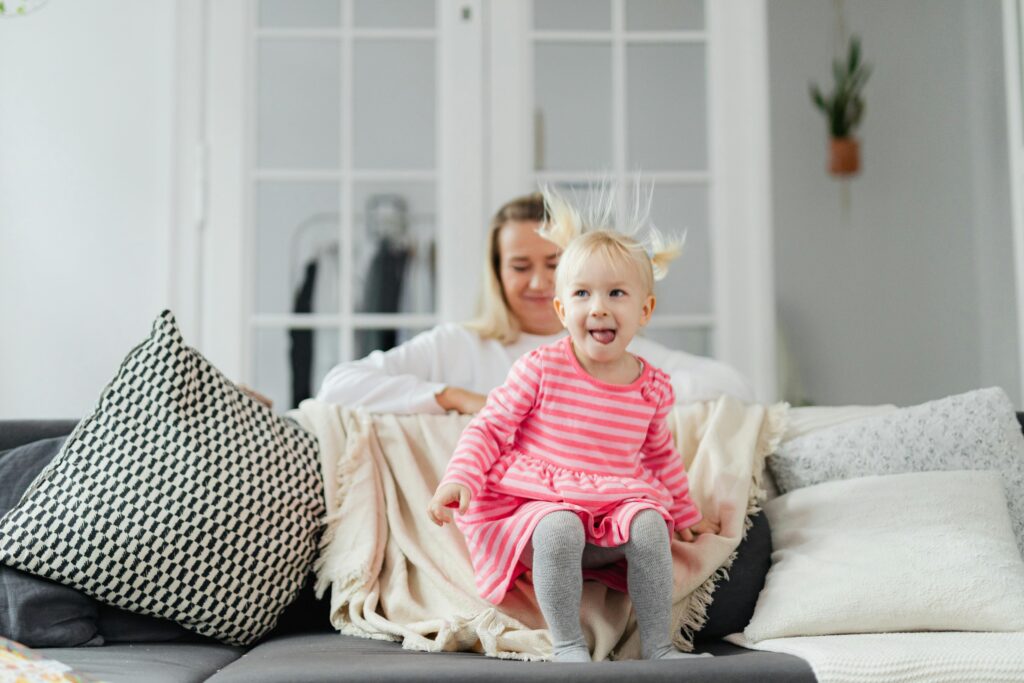
Why Balance Matters More Than You Think
Balance is more than just a physical skill—it’s a brain-building superpower. When toddlers climb, jump, wobble, and recover, they’re strengthening the connections between their body and brain (Goddard Blythe, 2005).
These balance challenges engage the vestibular system, located in the inner ear, which helps children understand where their body is in space (Ayres, 2005). This, in turn, supports:
- Core strength and coordination
- Body awareness (essential for self-control and movement planning)
- Focus and attention
- Executive functioning skills like impulse control, memory, and flexible thinking (Jensen, 2005; Harvard Center on the Developing Child, 2020)
In short? Wobbling around on a couch cushion is actually helping your toddler organize their brain for better thinking and behavior.
5 Easy Couch Cushion Balance Games
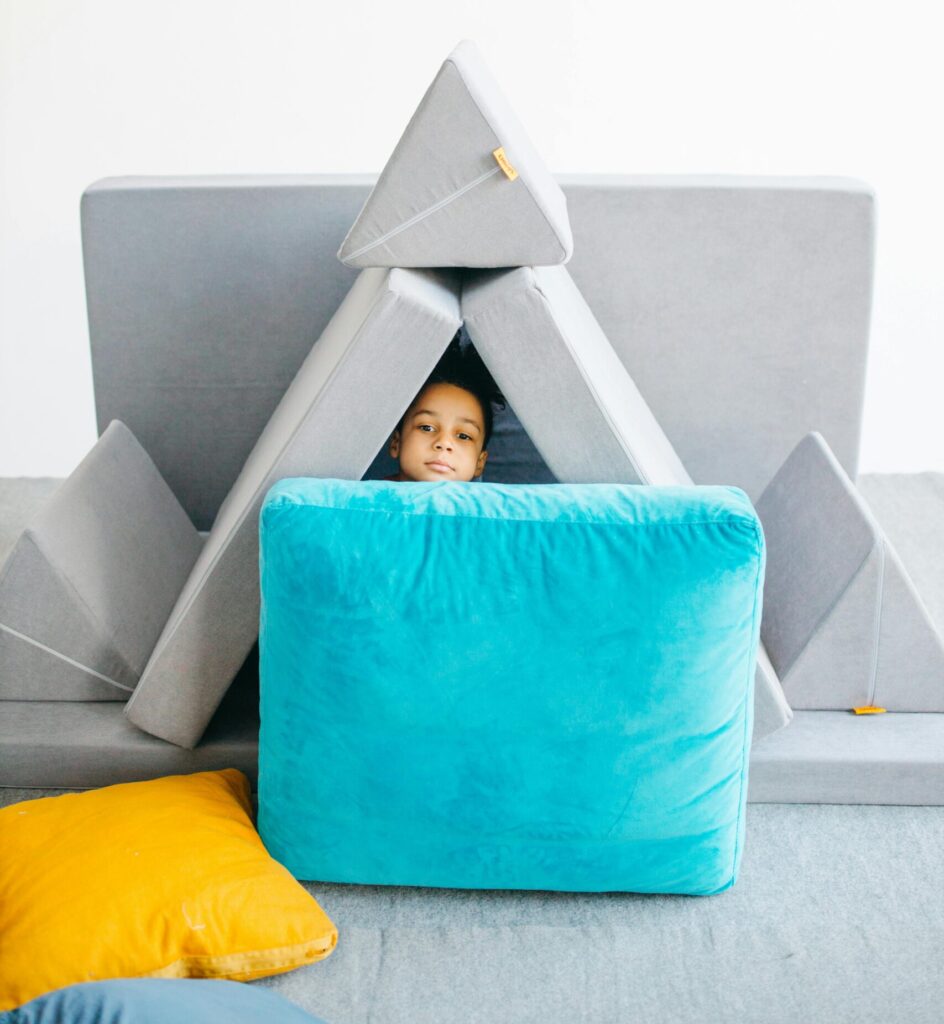
These games are screen-free, gear-free, and giggle-full. Use what you have—throw pillows, cushions, folded blankets, and a safe play area with supervision.
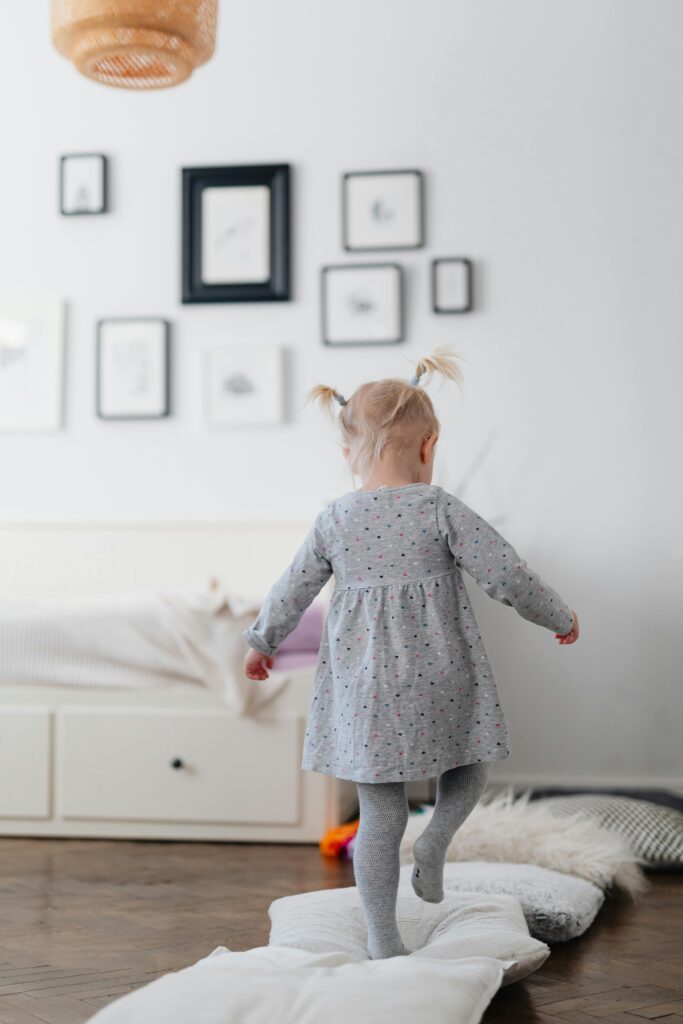
1. Cushion Path Challenge
Lay cushions in a line (or zig-zag) and invite your child to walk from one to the next. Add a “don’t fall in the lava!” rule for fun.
Why it works: Crossing from one unstable surface to the next improves balance, body awareness, and decision-making (Zero to Three, 2022).
2. Freeze and Wiggle
Turn on music and let your toddler move across the cushions—but when the music stops, they have to freeze!
Why it works: Builds inhibitory control (a key executive function) and engages both balance and self-regulation (Harvard Center on the Developing Child, 2020).
3. Toss and Step
Give your child a soft toy to toss into a basket after each successful step across the cushions.
Why it works: Adds a layer of coordination and sequencing, helping with working memory and focus (Perry & Szalavitz, 2017).
4. One-Legged Statue
Challenge your child to balance on one foot on a cushion. Can they count to five? Can they do it with their eyes closed?
Why it works: Encourages core engagement and self-monitoring, key for both physical and mental control (Ayres, 2005).
5. Animal Moves Relay
Invite your child to cross the cushion path while pretending to be an animal—frog hops, bear crawls, or tiptoeing like a cat.
Why it works: Boosts creative thinking, spatial awareness, and midline crossing (important for brain hemisphere integration) (Goddard Blythe, 2005; The Inspired Treehouse, 2021).
Tips for Keeping It Safe and Fun
- Let your child lead—follow their ideas and build off their imagination.
- Clear furniture and sharp objects away from the play zone.
- Use yoga mats or blankets underneath for extra cushioning.
- Stay close for spotting and cheerleading!
A Little More Play, A Lot More Brainpower
The beauty of the Couch Cushion Olympics is how simple it is—yet the impact on your toddler’s development is big. These games aren’t just filling time; they’re building the foundation for stronger attention, better problem-solving, and emotional regulation down the road (CDC, 2023)..
So the next time you’re stuck inside, grab those cushions and let the games begin. Your toddler’s body—and brain—will thank you.
Tag @alittlemoreplay to show us your toddler’s Olympic moment!
References:
- Ayres, A. J. (2005). Sensory Integration and the Child. Western Psychological Services.
- Goddard Blythe, S. (2005). The Well Balanced Child: Movement and Early Learning. Hawthorn Press.
- Jensen, E. (2005). Teaching with the Brain in Mind. ASCD.
- Perry, B. D., & Szalavitz, M. (2017). The Boy Who Was Raised as a Dog. Basic Books.
- Harvard Center on the Developing Child. Executive Function & Self-Regulation
- Centers for Disease Control and Prevention (CDC). Child Development Milestones
- Zero to Three. Early Development & Well-Being
- The Inspired Treehouse. Vestibular Activities for Kids