
When your baby lifts their head during tummy time or rolls over with determination, it may not seem like much—but those tiny, wobbly movements are the beginning of something big.
From the first head lift to those first intentional kicks, your infant is laying the foundation for balance, coordination, and future learning. This post is all about supporting those early milestones with simple, safe, and meaningful movement.

Why Balance Starts Early (Yes, Even in Infancy)
Balance doesn’t suddenly appear when babies start standing or walking. It begins much earlier, as their bodies and brains learn to respond to gravity, adjust posture, and coordinate muscles.
Early movement stimulates the vestibular system—the inner ear structure responsible for balance and spatial orientation (Ayres, 2005). This system is active from birth and influenced by:
- Head movements
- Shifting body position
- Rolling, rocking, and gentle swaying
The more opportunities babies have to move with intention, the stronger their foundation becomes for balance, motor planning, and even attention later on (Goddard Blythe, 2005; Slining et al., 2010).
0–10 Month Movement Milestones That Build Balance
Here are age-appropriate, play-based activities that gently activate your baby’s balance systems—no fancy equipment needed!
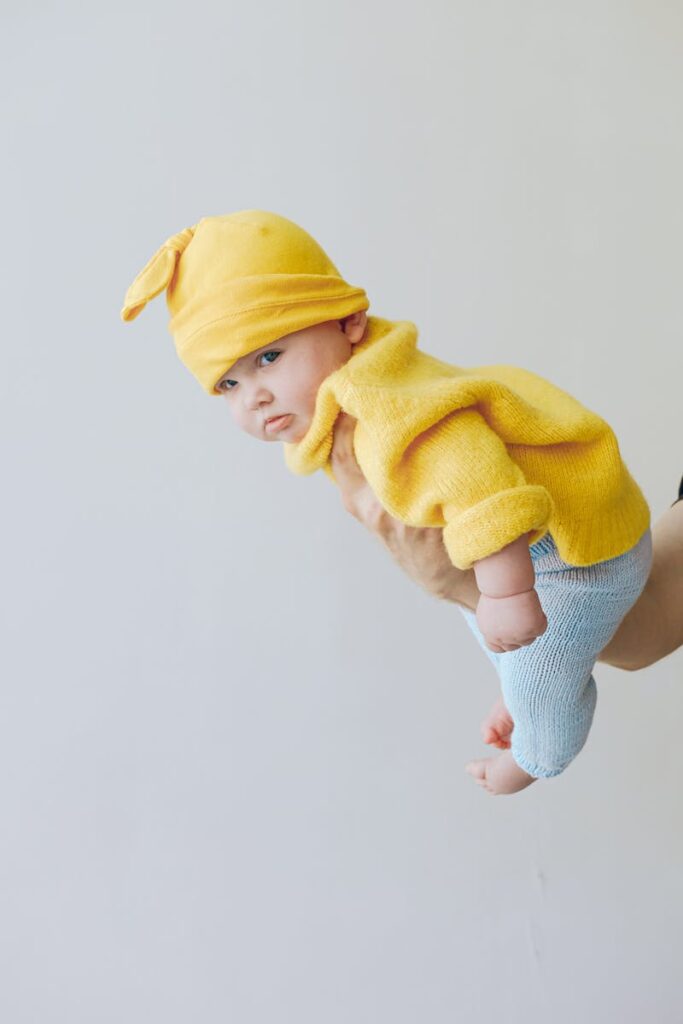
1. Tummy Time with Head Turns (0–3 months) – Either while baby is carried or on a flat surface, tummy time is essential.
Why it matters: Strengthens neck and core muscles needed to stabilize the head—key for balance and visual tracking.
Try this: Lay baby on a firm surface for short sessions. Gently encourage head turns by showing a toy or your face on either side. Alternatively, try the ‘tiger in the tree’ hold—baby lies tummy-down along your forearm. I found it more comfortable to carry both my girls with their heads nestled near the crook of my elbow.
Tip: For tummy time on a flat surface, place a rolled towel under their chest if they need extra support.
2. Slow Rocking & Gentle Bouncing (0–6 months)
Why it matters: Activates the vestibular system and soothes the nervous system. Try this: Hold baby securely and rock side to side or bounce gently while singing. Tip: A yoga ball can be a great tool—with supervision and support!
3. Rolling Practice (4–7 months)
Why it matters: Rolling strengthens the core and helps the brain understand how the body moves through space.
Try this: Lay baby on a soft mat and gently assist them in rolling side-to-side. Celebrate their effort!

4. Reaching Across the Body (3–6 months)
Why it matters: Begins early midline crossing—a skill tied to brain hemisphere integration and balance.
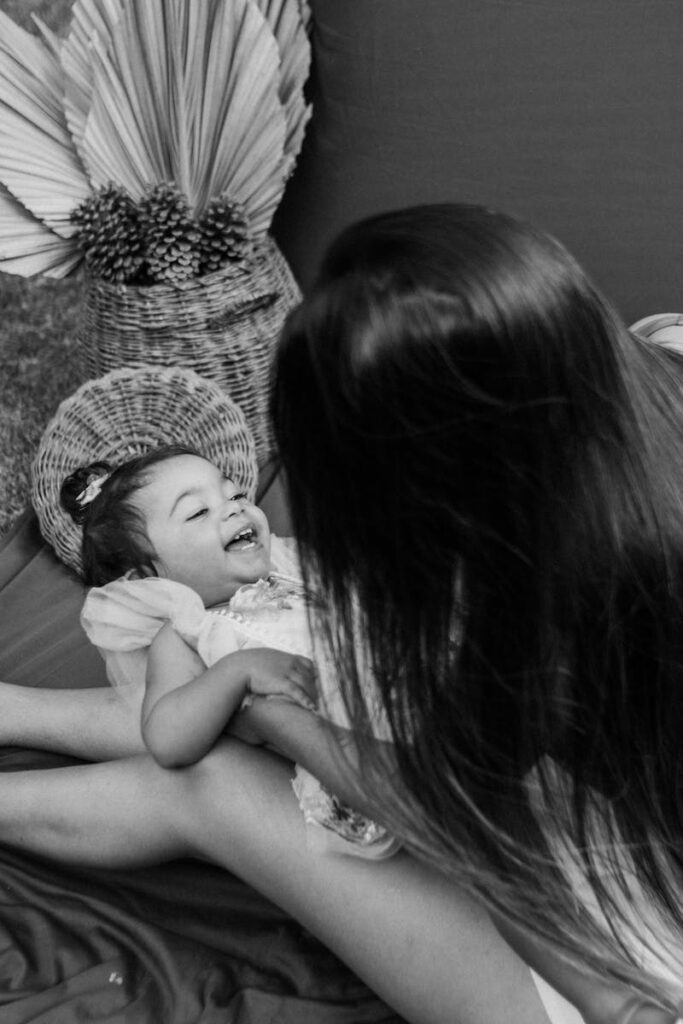
Try this: During floor play, encourage baby to reach across their body for toys. Try placing a soft toy just out of reach.
5. Supported Sitting & Reaching (6–8 months)
Why it matters: Trains postural control and balance as baby adjusts to a new center of gravity.
Try this: Let baby sit on your lap or floor with a Boppy or firm cushion behind them. Offer toys to reach, hold, or drop.
6. Belly Scooting or Crawling Prep (7–10 months)
Why it matters: Crawling supports cross-lateral movement, which develops balance, coordination, and bilateral control.
Try this: Place a soft toy in front of baby during tummy time to motivate pushing forward or scooting. Floor time is key!

Safety First: Tips for Infant Movement Play
- Always supervise floor and tummy time sessions.
- Use firm, flat surfaces—not soft beds or pillows—for motor play.
- Support the head and neck gently, especially in early months.
- Follow your baby’s cues—some days they’ll be eager to move, others they may just want snuggles.
- Keep sessions short and sweet—frequent, low-pressure movement builds more than long “workouts.”

Your Role as a Parent: The Magic Multiplier
Your presence during movement play does more than encourage development—it creates emotional safety, confidence, and connection.
- Celebrate the effort, not just the outcome.
- Narrate what your baby is doing: “You’re lifting your head so high!”
- Mirror their movements and respond with smiles or sounds.
- Follow their lead—if they’re trying to roll, give a little support and lots of praise.
“Movement fuels the brain, and connection fuels the heart. Together, they build a foundation for lifelong learning.”
Bottom Line: Balance Starts With Love and Movement
Before balance looks like standing on one foot or walking a beam, it begins with those sweet, simple motions: a head lift, a rock, a roll. With your loving encouragement and a safe space to move, your baby is already doing the beautiful, important work of growing their brain through play.
So lay down that blanket, offer a gentle bounce, and let the wobbly magic unfold.
Tag @alittlemoreplay and show us your baby’s first big movements—we’re cheering for every lift, wiggle, and roll!
References
- Ayres, A. J. (2005). Sensory Integration and the Child. Western Psychological Services.
- Goddard Blythe, S. (2005). The Well Balanced Child: Movement and Early Learning. Hawthorn Press.
- Slining, M. M., et al. (2010). Infant motor development and its relation to later physical activity. Journal of Pediatrics, 157(3), 431–436.
- The Tummy Time Method. (2023). [https://www.tummytimemethod.com]
- Zero to Three. [https://www.zerotothree.org/early-development]