
Wobbling across a cushion. Teetering on one foot. Twirling like a dizzy top. These might look like just another day in toddlerhood, but behind the wobbles are powerful brain connections forming.
We’re bringing balance into focus—literally. Because every tiny tiptoe, jump, and tumble is helping wire your toddler’s brain for better focus, stronger coordination, and future learning.
Let’s dive into why balance play matters (a lot), how to keep it fun, and how your presence as a parent is the not-so-secret ingredient to making it work.
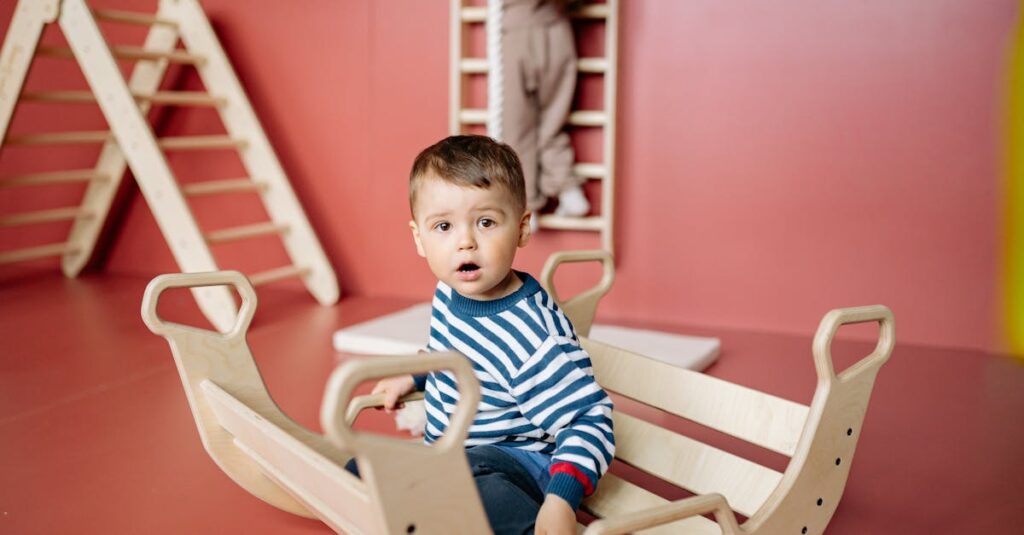
Why Balance Is a Brain-Builder
Balance is more than a physical milestone—it’s deeply tied to your child’s cognitive and emotional development.
When toddlers balance, they’re activating their vestibular system—the sensory system in the inner ear that tells the brain where the body is in space (Ayres, 2005). This system works closely with vision and touch to support:
- Posture and coordination
- Attention and impulse control
- Core strength and self-regulation (Goddard Blythe, 2005)
Research shows that children with stronger motor skills tend to have better executive function—the brain’s control center for memory, focus, planning, and flexibility (Cameron et al., 2012; Diamond, 2015). In other words, balancing today helps build the skills they’ll need for reading, problem-solving, and emotional resilience tomorrow.
Creative Ways to Build Balance Through Play
Here are some fun, low-prep activities to build balance while keeping things lighthearted and screen-free
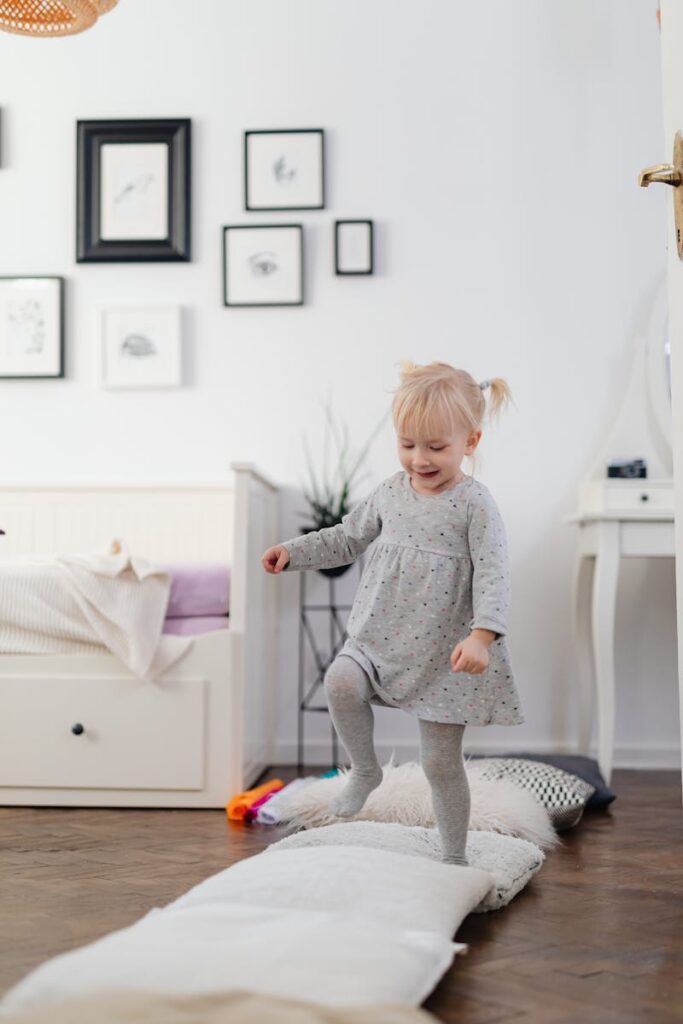
- Cushion Paths
- Line up pillows or couch cushions and invite your toddler to walk across. Make it a “lava floor” game to add excitement and imagination.
- Cushion Paths
- Line up pillows or couch cushions and invite your toddler to walk across. Make it a “lava floor” game to add excitement and imagination.
- Animal Moves
- Hop like a bunny, balance like a flamingo, crawl like a bear. Mimicking animals makes balancing more dynamic and playful.
- One-Legged Games
- Challenge your child to stand on one foot and count to five. Add a twist: can they balance while holding a toy?
- Obstacle Courses
- Use chairs, blankets, and boxes to build a safe DIY course. Balancing over, under, and through builds body awareness and confidence.
The Power of You: Why Parent Participation Matters
Your toddler doesn’t need perfect equipment—but they do need you.
When you participate in movement play—by cheering, balancing alongside them, or simply watching with delight—you’re doing more than encouraging physical development. You’re supporting:
- Emotional bonding (Perry & Szalavitz, 2017)
- Motivation and persistence
- Confidence through co-regulation
Modelling joy and movement tells your child: This is fun. This matters. Let’s do it together.
Even just 10–15 minutes of shared active play a day can create powerful developmental shifts—and sweet memories, too.
Tips for Safe, Successful Balance Play
- Clear the area of sharp corners or furniture.
- Use yoga mats or blankets to soften hard floors.
- Always supervise climbing or jumping activities.
- Dress toddlers in comfortable clothes and non-slip socks or barefoot.
- Respect your child’s limits—if they’re tired or frustrated, pause for a cuddle and try again later.
The Bottom Line
Balance play isn’t about perfection—it’s about practice. Every tumble, tiptoe, and silly spin is shaping a stronger, more focused, and better-connected brain.
So this month, lean into the wobble. Join the fun. And remember: when toddlers move with joy, they’re learning more than we can see.
Tag @alittlemoreplay to share your toddler’s wobbly wins—we’ll be cheering right alongside you.
References
- Ayres, A. J. (2005). Sensory Integration and the Child. Western Psychological Services.
- Goddard Blythe, S. (2005). The Well Balanced Child: Movement and Early Learning. Hawthorn Press.
- Diamond, A. (2015). Executive functions: Insights into ways to help children thrive. Zero to Three Journal, 35(3), 9–17.
- Cameron, C. E., Cottone, E. A., Murrah, W. M., & Grissmer, D. W. (2012). How are motor skills linked to children’s school performance and academic achievement? Child Development Perspectives, 6(3), 186–192.
- Perry, B. D., & Szalavitz, M. (2017). The Boy Who Was Raised as a Dog. Basic Books.