
The Complete Baby Play Guide (0–12 Months)
A Month-by-Month Guide to Movement, Learning & Bonding
Simple, developmentally appropriate activities to support your baby’s physical, cognitive, language, sensory and emotional development during the most important year of life.
0–2 Months
Welcome to the World

| Development | Play Ideas |
|---|---|
| Physical | Daily tummy time (30–60 seconds several times a day), chest-to-chest tummy time, bicycle legs, gentle stretching, supported upright carrying, turning head to both sides. |
| Vision | Face-to-face conversations, black-and-white cards, slowly move your face side to side, mirror time. |
| Hearing & Language | Talk during every diaper change, sing lullabies, imitate baby’s sounds, narrate your day. |
| Sensory | Gentle massage, skin-to-skin, different soft fabrics, warm bath experiences. |
| Social-Emotional | Smile often, make eye contact, respond to cries promptly, cuddle frequently. |
Watch for Baby’s Cues
Ready to Play
- Eyes wide open
- Looking at your face
- Calm movements
- Turns toward your voice
Needs a Break
- Looking away
- Hiccups
- Yawning
- Fussiness
- Finger splaying
- Arching back
Remember: Babies this age tire quickly. Five minutes of quality interaction is wonderful.
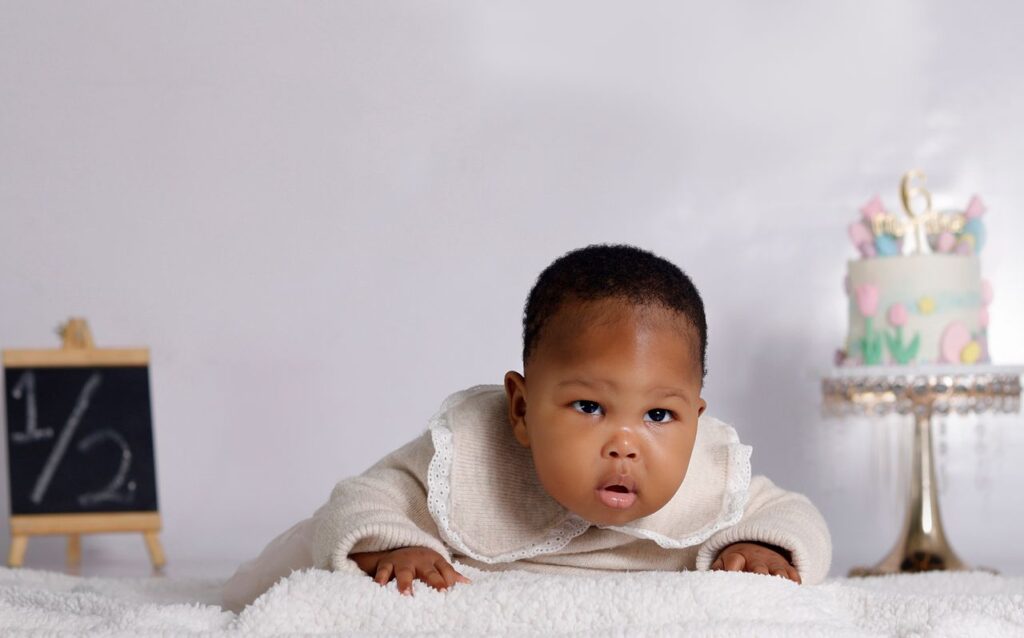
2–4 Months
Discovering Their Body
| Development | Play Ideas |
|---|---|
| Physical | Longer tummy time, reaching for hanging toys, side-lying play, assisted rolling, kicking games. |
| Fine Motor | Offer rattles, encourage grasping, explore different textures. |
| Vision | Follow colourful toys across midline, mirror play, tracking games. |
| Language | Copy coos, pause for baby to “reply,” sing repetitive songs. |
| Social | Big smiles, funny faces, gentle tickles, peek-a-boo beginnings. |
Bonding Focus
- Follow baby’s lead.
- Wait for responses.
- Celebrate every smile.
- Respond warmly when baby vocalizes.
4–6 Months
Ready to Explore
| Development | Play Ideas |
|---|---|
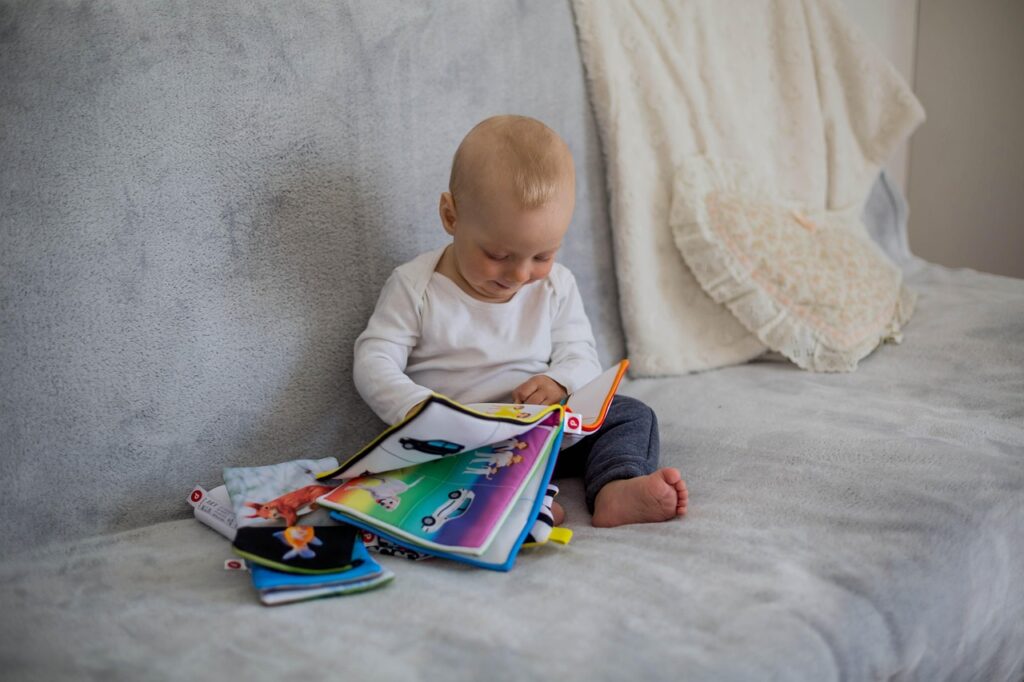
| Physical | Supported sitting, rolling games, reaching across the body, tummy-time obstacle play. |
| Strength | Push-up practice, pivoting on tummy, supported bouncing. |
| Hands | Transfer toys hand-to-hand, crinkle paper, soft blocks. |
| Language | Read simple books daily, name familiar people, repeat sounds. |
| Social | Mirror games, laughter games, songs with actions. |
Baby Cues
When baby repeatedly reaches toward something…
They are asking:
“Can I explore that?”
Allow safe exploration whenever possible.
6–9 Months
On the Move
| Development | Play Ideas |
|---|---|
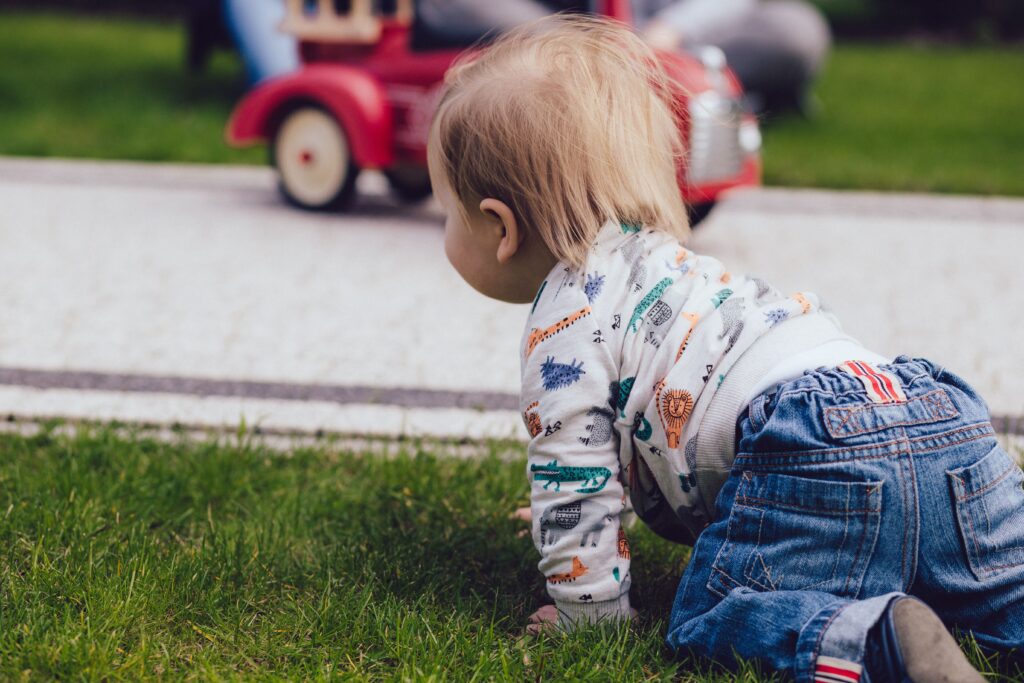
| Gross Motor | Crawling tunnels, obstacle cushions, pulling to kneel, supported standing. |
| Fine Motor | Finger foods, stacking cups, dropping toys into containers. |
| Thinking Skills | Hide-and-find toys, object permanence games, cause-and-effect toys. |
| Language | Name everything, point to pictures, imitate animal sounds. |
| Social | Peekaboo, clap games, wave goodbye, copy facial expressions. |
Emotional Development
Around this age babies may experience:
- Stranger anxiety
- Separation anxiety
This is healthy.
It shows baby has developed strong attachments.
Respond by:
- comforting without rushing
- staying calm
- saying goodbye instead of sneaking away
- returning when promised
9–12 Months
Becoming Independent
| Development | Play Ideas |
|---|---|
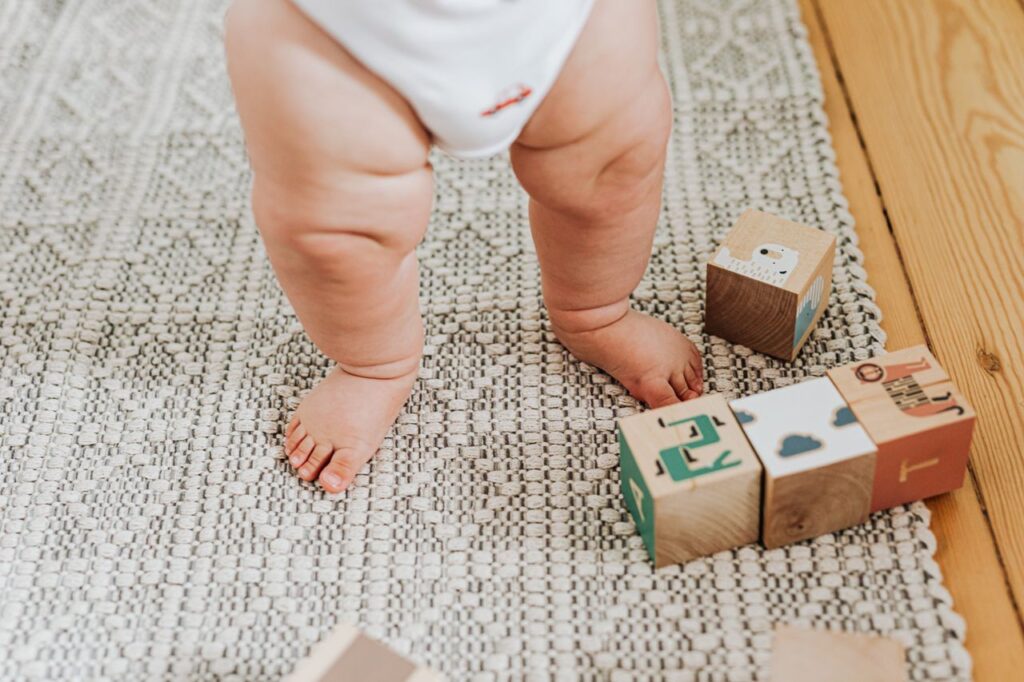
| Gross Motor | Cruising furniture, squat-and-stand games, push toys, climbing cushions safely. |
| Fine Motor | Posting activities, shape sorters, finger foods, turning book pages. |
| Thinking | Simple problem-solving toys, nesting cups, hide objects under cloths. |
| Language | Name body parts, simple instructions, nursery rhymes, lots of conversation. |
| Social | Pretend tea party, pat-a-cake, waving, copying household routines. |
Encourage Independence
Allow baby opportunities to:
- try first
- solve simple problems
- make choices between two toys
- explore safely nearby
Confidence grows through successful experiences.
Everyday Activities That Matter Most
These simple moments build the brain more than expensive toys.
| Everyday Routine | Learning Opportunity |
|---|---|
| Feeding | Eye contact, conversation, trust |
| Bath Time | Sensory exploration, body awareness |
| Diaper Changes | Language, connection, movement |
| Walks Outside | Nature, vocabulary, visual development |
| Reading Books | Language, attention, bonding |
| Singing | Rhythm, memory, speech |
| Cuddles | Emotional security |
| Floor Play | Motor development |
| Mealtime | Fine motor practice |
| Bedtime Routine | Predictability and emotional regulation |
Reading Your Baby’s Signals
| Baby is Saying… | What You Can Do |
|---|---|
| “I’m ready!” | Smile, play, interact. |
| “Slow down.” | Reduce stimulation. |
| “I’m overwhelmed.” | Hold baby close, speak softly. |
| “I’m curious.” | Allow safe exploration. |
| “I need comfort.” | Respond promptly with cuddles and reassurance. |
Building Secure Attachment Every Day
Research consistently shows that secure attachment forms through thousands of small, responsive interactions rather than perfection. Aim to be “good enough,” not perfect.
Try to:
- Respond warmly to your baby’s cries.
- Smile and make eye contact often.
- Talk during everyday routines.
- Comfort your baby when they are upset.
- Follow their interests during play.
- Respect signs that they need a break.
- Create predictable routines for feeding and sleep.
- Enjoy moments of closeness through cuddles, songs, and gentle touch.
These everyday interactions help your baby develop trust, confidence, emotional regulation, and healthy relationships later in life.
A Quick Reference Guide
| Age | Physical Focus | Play Focus | Bonding Focus |
|---|---|---|---|
| 0–2 months | Head control, tummy time | Face-to-face interaction | Responding to cues, skin-to-skin |
| 2–4 months | Reaching, kicking, rolling preparation | Tracking, grasping | Smiles, conversations, imitation |
| 4–6 months | Rolling, sitting, pushing up | Exploration and sensory play | Following baby’s lead |
| 6–9 months | Crawling, kneeling, standing preparation | Problem-solving and movement | Supporting separation with reassurance |
| 9–12 months | Cruising, standing, first steps | Pretend play, language, exploration | Encouraging independence while staying emotionally available |
The Most Important Thing to Remember
The greatest gift you can give your baby isn’t the latest toy or the perfect activity—it’s you. Your loving presence, responsive care, and playful interactions provide the foundation for healthy brain development, emotional wellbeing, and lifelong learning.
Play doesn’t have to be elaborate. A smile, a song, a cuddle, or a few minutes on the floor together can have a lasting impact. By following your baby’s cues and enjoying each stage of their journey, you’re helping them grow into a confident, curious, and secure little learner.
ALMP Tip: Connection comes before milestones. When babies feel safe, loved, and understood, they are more likely to explore, learn, and thrive.
References:
- American Academy of Pediatrics. Caring for Your Baby and Young Child (2024 edition).
- Centers for Disease Control and Prevention. Developmental Milestones (updated 2025).
- Harvard Center on the Developing Child. Resources on serve-and-return interactions and brain development (2023–2024).
- World Health Organization. Guidelines on Physical Activity, Sedentary Behaviour and Sleep for Children Under 5 Years of Age (2019).
- Zero to Three. Resources on infant social-emotional development and responsive caregiving.