
Why Gross Motor Skills Come Before Fine Motor Skills
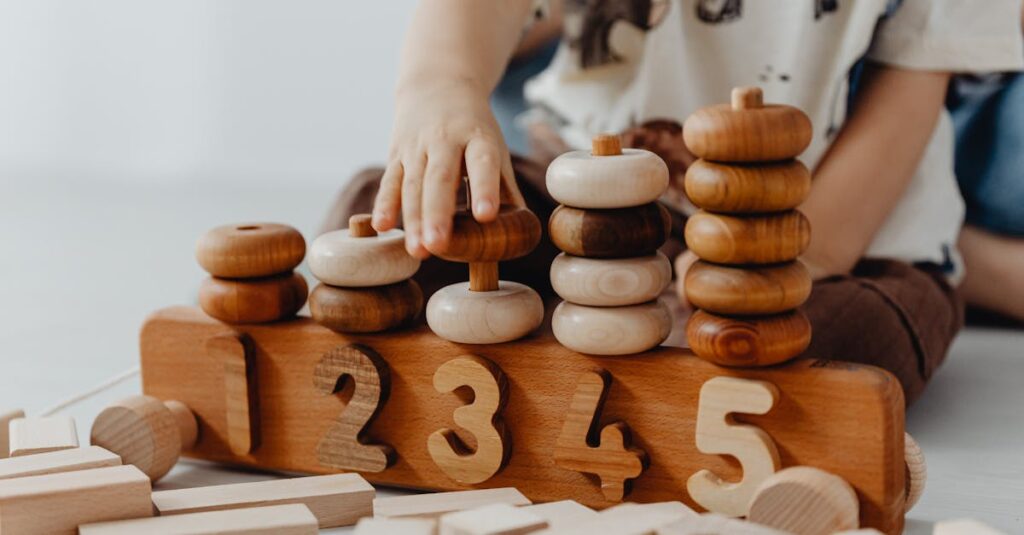
When your baby tries to grab a toy but wobbles and tumbles, it’s easy to think they need more “finger practice.” In reality, fine motor skills — the small, precise movements of fingers, toes, and even oral muscles — are anchored in gross motor skills. Before your child can thread beads or hold a crayon, they need strong core, shoulder, and leg muscles.
This principle is often summarized as proximal stability for distal mobility: the big muscles at the center of the body must stabilize before the small muscles at the edges can move with control (Act Therapy Services).

The Science: How Movement Develops
Child development follows predictable trends:
- Cephalocaudal: Control develops from head to toe.
- Proximodistal: Movement develops from the center outwards.
- Gross-to-Specific: Large, sweeping actions come before precise ones (PMC).
This is why crawling, rolling, climbing, and balancing are just as important as scribbling or stacking — they lay the neurological and muscular groundwork for finer skills later.
Why Big-Body Play Matters
1. Core Strength = Stability
The trunk is the anchor for all other movements. Without core strength, even simple reaching or grasping becomes difficult (OT Mom Learning Activities).
2. Shoulder & Hip Control = Reach & Balance
Weight-bearing through crawling or climbing builds shoulder stability, which is essential before finger precision (CHoR).
3. Balance Systems = Spatial Awareness
Swinging, tumbling, and jumping activate the vestibular and proprioceptive systems, helping kids know where their bodies are in space. That awareness makes fine control possible (Frontiers in Psychology).
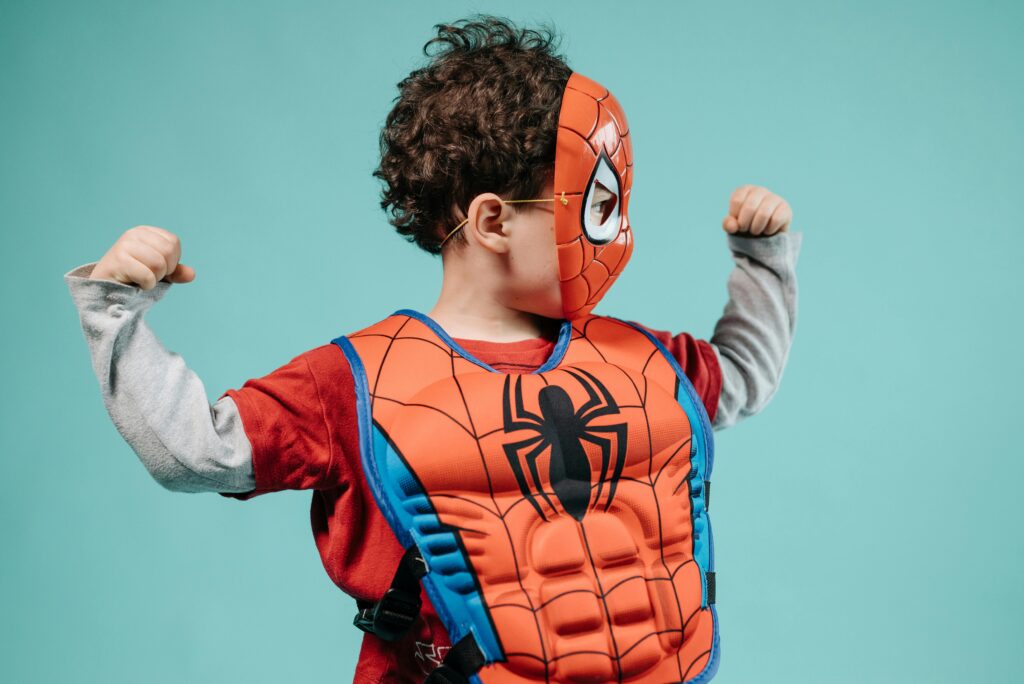
From Big Muscles to Small Muscles
Once the “big” systems are stable:
- Hands & Fingers can move with precision.
- Feet & Toes help with balance and coordination.
- Oral Muscles (jaw, tongue, lips) can refine speech and chewing, supported by posture and trunk stability (Frontiers in Psychology).
Practical Tips for Parents & Educators
✅ Encourage crawling, rolling, climbing, jumping.
✅ Include tummy time, bear walks, “superman” play for core strength.
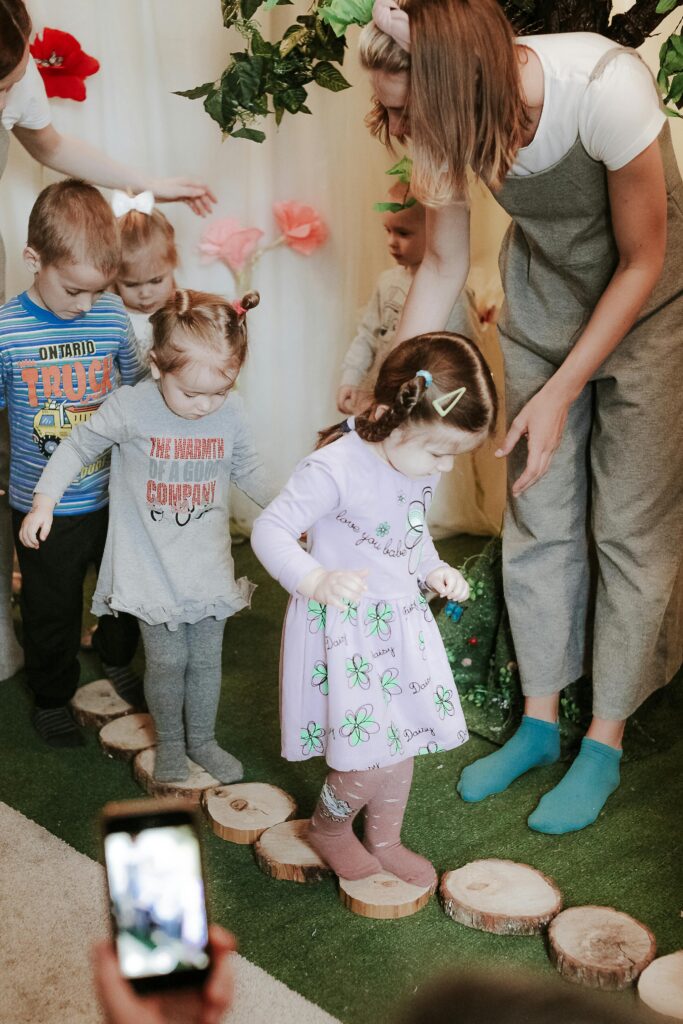
✅ Use obstacle courses and free play outdoors.
✅ Warm up with gross motor activity before fine-motor tasks.
✅ Be patient: threading beads and drawing come after strong posture.
Key Takeaway
Fine motor milestones don’t stand alone. They rest on the foundation of gross motor development. By giving your child plenty of time for big-body play, you’re building the strong, stable base that makes little fingers — and even little words — thrive.
Want more play-based insights? Subscribe to The Playful Minute — your weekly guide to movement, milestones, and fun!
References
- Act Therapy Services. (n.d.). Proximal stability before distal mobility in child development. Retrieved from https://www.acttherapyservices.com
- OT Mom Learning Activities. (n.d.). Why core muscles are important for child development. Retrieved from https://www.ot-mom-learning-activities.com
- Children’s Hospital of Richmond (CHoR). (n.d.). Developmental milestones and motor skills progression. Retrieved from https://www.chrichmond.org
- Frontiers in Psychology. (2017). The contribution of the vestibular system to motor development and learning. Frontiers Media. Retrieved from https://www.frontiersin.org/journals/psychology
- PMC – PubMed Central. (n.d.). Principles of motor development: Cephalocaudal, proximodistal, and gross-to-specific. Retrieved from https://www.ncbi.nlm.nih.gov/pmc