
I don’t know about you, but whenever my little family steps into nature—whether it’s a walk through a leafy trail or a lazy afternoon at the beach—something special happens. We all seem to exhale a little deeper. The noise quiets, the pace slows, and we’re simply present.
And for toddlers, that kind of presence is powerful. Nature offers more than just a change of scenery—it’s a rich, ever-changing playground for their growing minds and bodies. From balancing on uneven ground to noticing the flutter of a butterfly, every outdoor moment supports movement, curiosity, and calm. It’s where play turns into exploration, and exploration turns into learning.
Explorative play outdoors isn’t just about getting fresh air. It’s a rich, sensory-filled experience that helps toddlers connect to their bodies, their environment, and the natural rhythms of the world around them. And yes—there’s science to back that up.
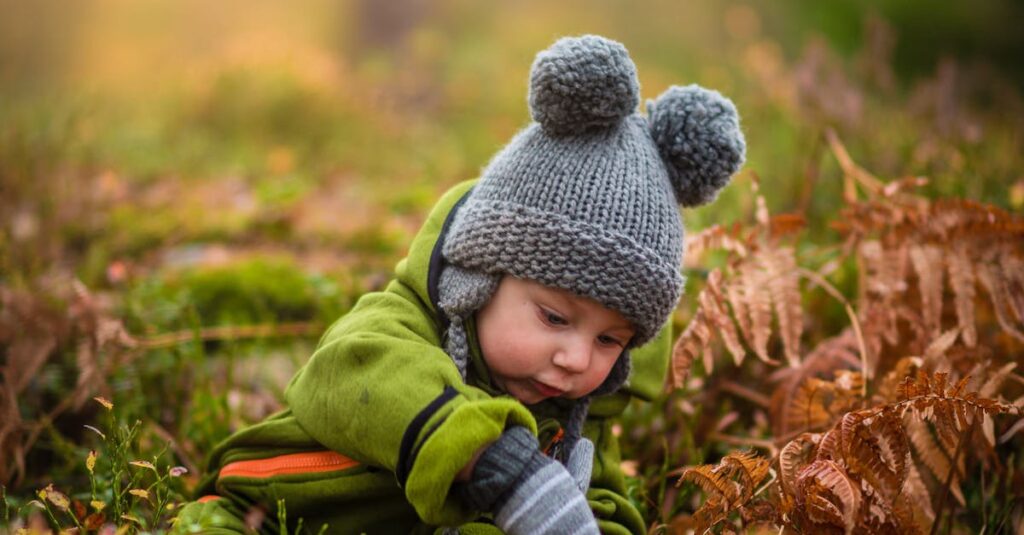
Why Nature Is the Ultimate Playroom
Unlike controlled indoor spaces, outdoor environments are inherently unpredictable and richly textured. This variety gives toddlers a chance to engage all their senses: feeling cool stone and soft moss, watching fluttering leaves or shifting clouds, hearing birdsong or rustling wind. These sensory inputs help wire the brain for emotional regulation, attention, and learning (Fjørtoft, 2004).
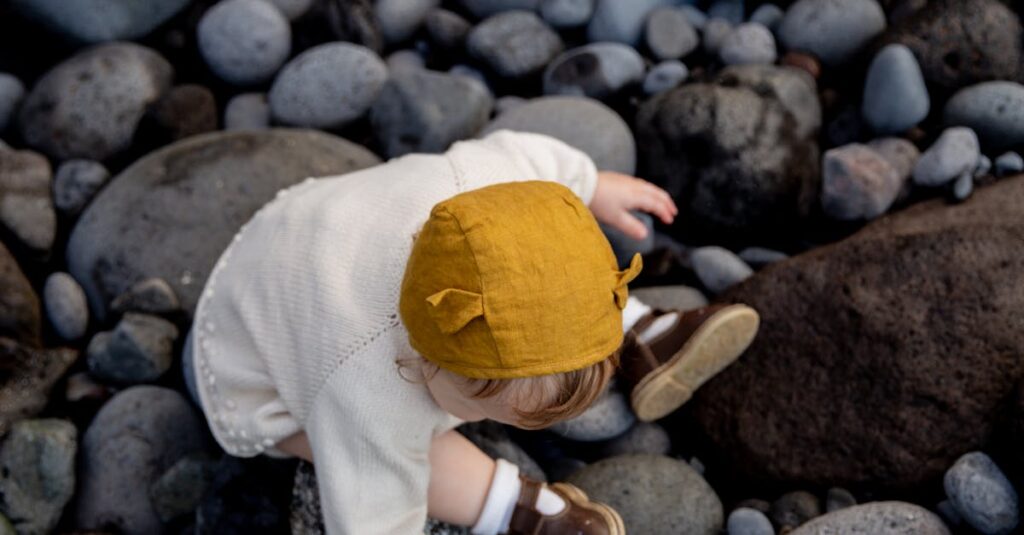
As they walk on uneven ground, climb over rocks, or crawl through grass, children are naturally strengthening their balance, proprioception (body awareness), and motor planning. These are foundational skills not just for movement—but also for thinking, problem-solving, and emotional resilience (Adolph & Franchak, 2017).

Moving Minds: The Brain–Body Connection Outdoors
Movement in nature activates more than just muscles. According to research, physical activity in green spaces improves mood, reduces cortisol (the stress hormone), and enhances cognitive performance in children (Engemann et al., 2019). Simply put, outdoor play helps children feel more calm, focused, and joyful—which means they’re also more ready to learn.
Children who engage in unstructured, nature-based movement tend to develop more intuitive, self-regulated movement patterns. That’s because outdoor play often requires spontaneous adjustment: a log might wobble, the slope might be slippery, or a twig might snap unexpectedly. These experiences support adaptive thinking and safe risk-taking—key components in early brain development (Brussoni et al., 2012).
Try These Outdoor Explorative Play Activities
Here are some simple, science-backed ideas for toddlers aged 10–30 months:
1. Texture Trails
Create a nature walk where your child can crawl, step, or toddle over different textures—grass, sand, bark, gravel, smooth stone.
🧠 Why it works: Engages tactile feedback and balance systems; builds proprioception.
2. Treasure Toss
Collect natural materials like leaves, pebbles, or seed pods and toss them into a basket.
🧠 Why it works: Supports hand-eye coordination and bilateral movement.
3. Follow That Bug!
Encourage slow, mindful movement by following a ladybug, ant, or butterfly.
🧠 Why it works: Enhances visual tracking, focus, and connection to nature’s rhythms.
4. Shadow Stomp
Watch shadows move and invite your child to step, jump, or crawl over them.
🧠 Why it works: Teaches cause-effect, visual perception, and motor planning.
5. Stick Labyrinth
Arrange sticks in winding patterns on the ground and guide your child through.
🧠 Why it works: Promotes spatial awareness and midline crossing.
Tips for Safe and Enriching Outdoor Play
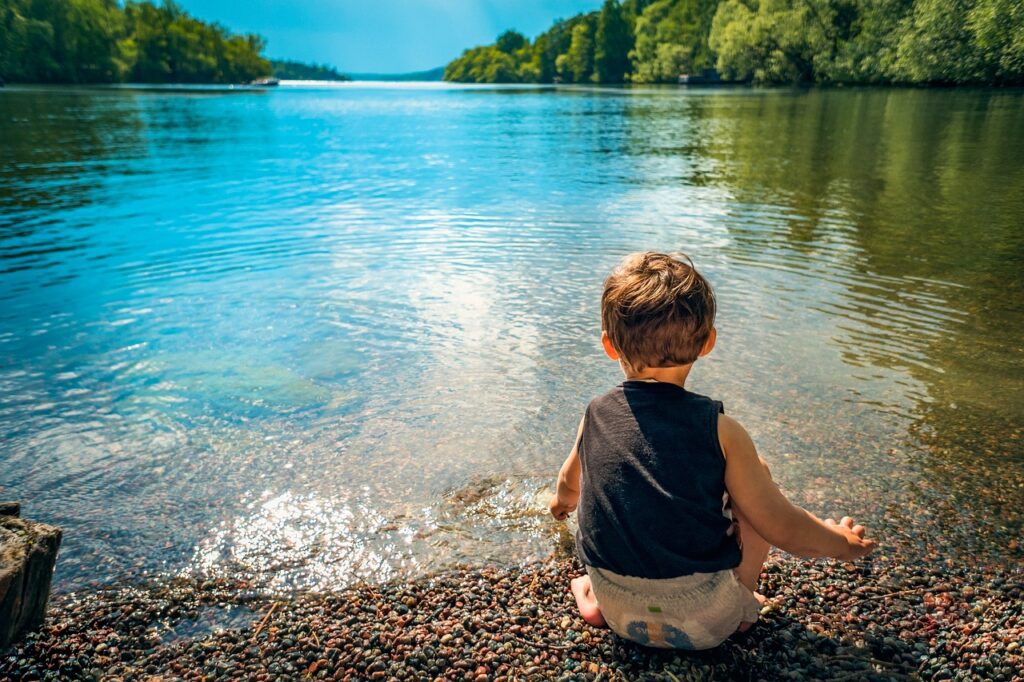
- Dress appropriately: Long sleeves, hats, and closed shoes can help protect against sun and bugs.
- Be tick-aware: Especially in grassy or wooded areas, do a post-play check.
- Let them lead: Follow your child’s pace and interest—you’re there to support, not steer.
- Supervise without hovering: Allow space for exploration but be present for safety and encouragement.
- Pack water and snacks: Toddlers can tire (and dehydrate) quickly during outdoor movement.
Why It Matters
Exploring outside invites children to tune in—to the world around them, and to their own bodies. It’s in these moments of slow wandering, joyful discovery, and whole-body learning that the deepest developmental gains are made.
Nature doesn’t rush, and neither do children when they’re given the space to explore. Let’s meet them there.
References
- Adolph, K. E., & Franchak, J. M. (2017). The development of motor behavior. Wiley Interdisciplinary Reviews: Cognitive Science, 8(1-2), e1430.
- Brussoni, M., Olsen, L. L., Pike, I., & Sleet, D. A. (2012). Risky play and children’s safety: Balancing priorities for optimal child development. International Journal of Environmental Research and Public Health, 9(9), 3134–3148.
- Engemann, K., Pedersen, C. B., Arge, L., Tsirogiannis, C., Mortensen, P. B., & Svenning, J. C. (2019). Residential green space in childhood is associated with lower risk of psychiatric disorders from adolescence into adulthood. PNAS, 116(11), 5188–5193.
- Fjørtoft, I. (2004). Landscape as playscape: The effects of natural environments on children’s play and motor development. Children, Youth and Environments, 14(2), 21–44.