
If you’ve ever watched your toddler crawl into a cardboard box, stack random objects, or waddle from one puddle to another with absolute joy, congratulations—you’ve just witnessed explorative play in action.
Explorative play is how babies and toddlers make sense of the world. It’s not about perfect outcomes, fancy toys, or structured lessons. It’s about doing—using their bodies, senses, and curiosity to discover how things (and they themselves!) work.
But here’s the twist: the richest explorative play happens when movement is involved. From crawling through tunnels to climbing over cushions, your little one isn’t just playing—they’re building strength, spatial awareness, balance, and even early problem-solving skills (Pereira et al., 2019).
So what exactly is explorative play, and how can you encourage it in safe, developmentally rich ways? Let’s break it down.

What Is Explorative Play?
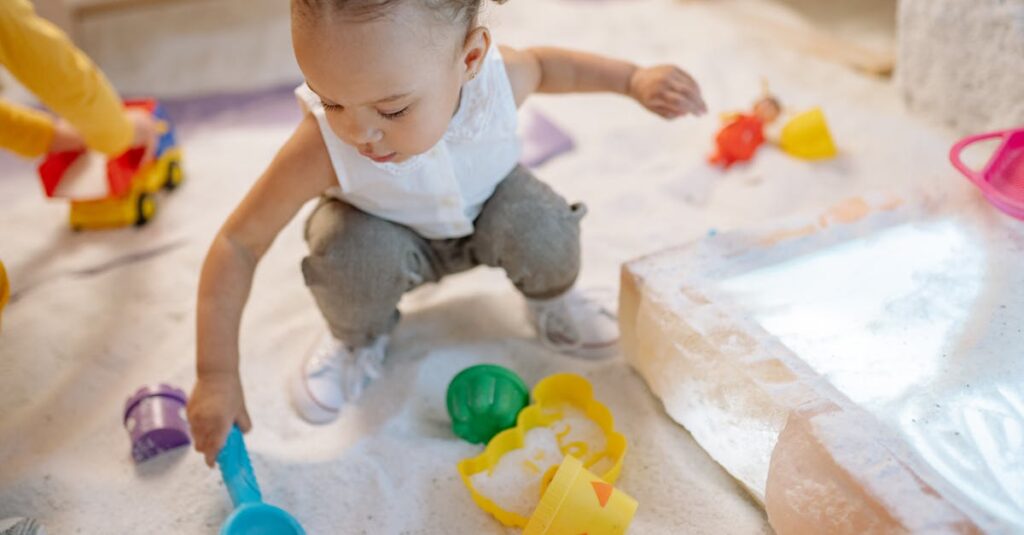
Explorative play (sometimes called sensorimotor play or discovery play) is when toddlers interact with their environment in open-ended, self-directed ways. They poke, push, drop, throw, crawl on, sit inside, climb over, and taste (yep!) as part of learning. It’s how they test cause and effect, build fine and gross motor skills, and figure out how their bodies relate to space.
For babies and toddlers between 10 months and 3 years, this kind of play is essential—especially when it involves physical activity.
Types of Explorative Play (With Movement!)
Here are some playful types of explorative play that engage the body and the brain:
1. Sensory-Motor Play
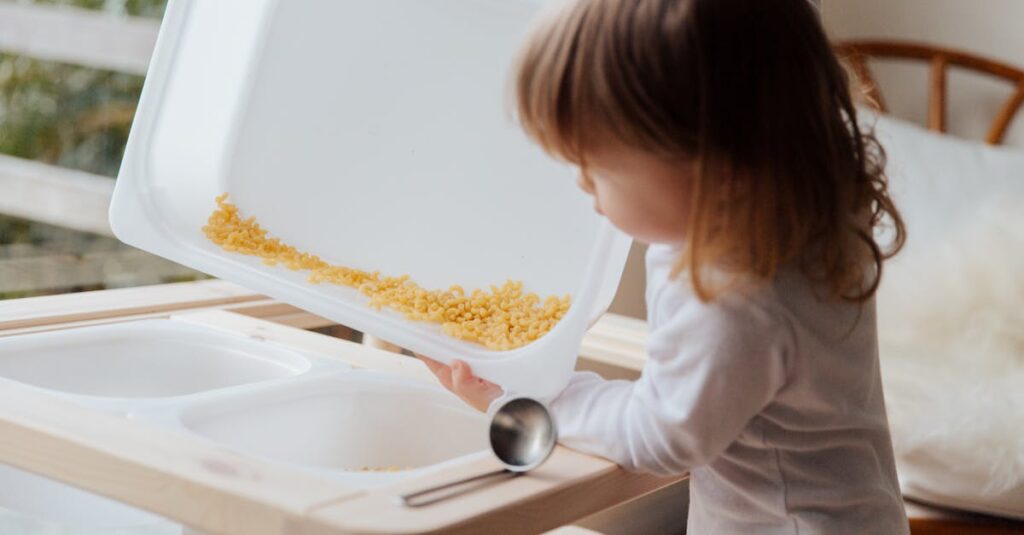
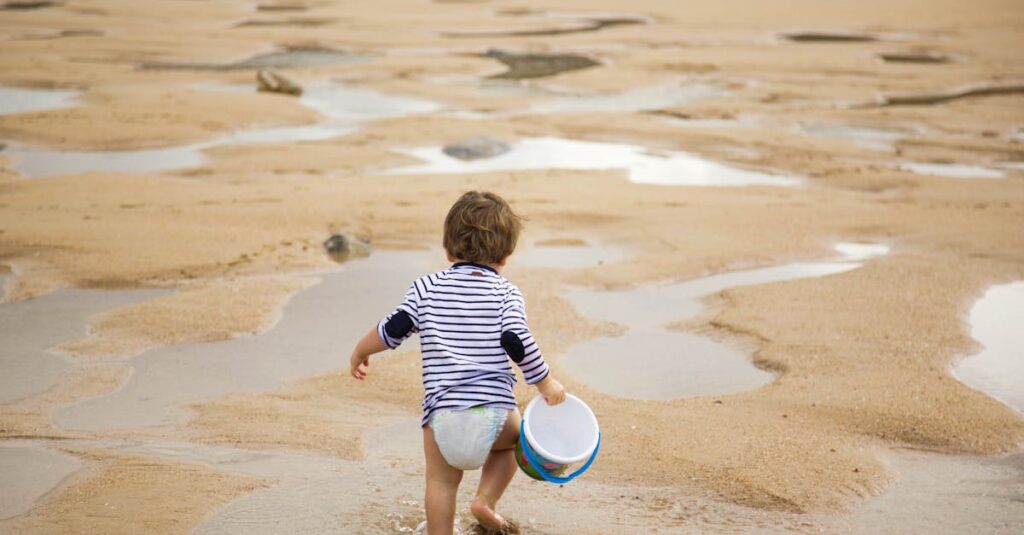
- Think: crawling on textured mats, feeling cool grass, stomping through water, or reaching for bubbles.
Why it matters: Builds sensory processing skills, coordination, and body awareness (Cameron et al., 2012).

2. Constructive Play
- Building towers, lining up blocks, or making a ramp for toy cars to zoom down.
- Add movement: Use larger soft blocks your toddler can carry, climb, or roll on.
Why it matters: Encourages problem-solving and strengthens gross and fine motor skills.
3. Locomotor Play
- Running, spinning, climbing, crawling, hopping—basically, joyful full-body movement.
- Set up soft obstacle courses with pillows or tunnels.
Why it matters: Strengthens coordination, balance, and spatial navigation (Adolph & Hoch, 2019).

4. Explorative Object Play
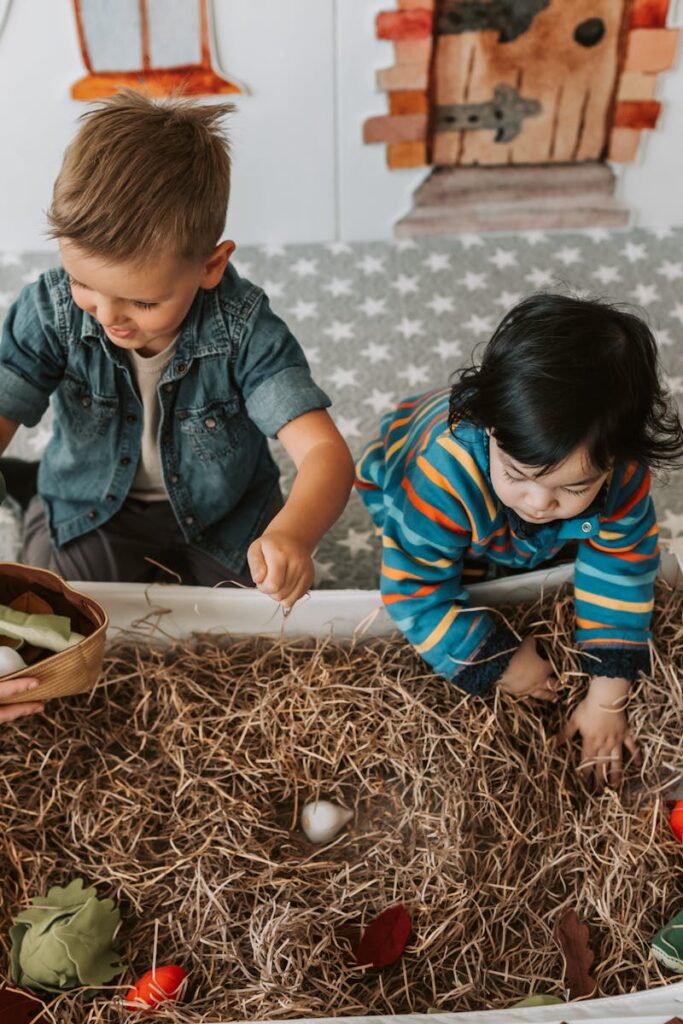
- Your toddler opens, drops, shakes, stacks, or investigates everyday items.
- Try filling baskets with safe household objects to carry, bang together, or move around.
Why it matters: Sharpens motor planning and introduces early physics (gravity, cause and effect!).
5. Imaginative Movement Play
- Pretend play that includes movement—like pretending to be an animal, dancing, or pushing a toy stroller.
Why it matters: Connects motor development with symbolic thinking and emotional expression.
How to Encourage Safe and Engaging Explorative Play
Here are some gentle guidelines to help you support active exploration safely and confidently:
Follow Your Child’s Lead
- Let your toddler decide what’s interesting. Your job is to create a safe space for that curiosity to roam.
Create Yes Spaces
- Use soft flooring, rounded furniture, and safe materials so your child can move freely and safely.
- Tip: Think about what your toddler can climb, crawl over, or roll under without constant “no”s
Rotate Toys and Props
- Offer open-ended items like scarves, large cardboard boxes, plastic bowls, balls, or large blocks. Change it up every few days to spark fresh interest.
Supervise Without Controlling
- Be close by for safety—but resist the urge to direct or correct every move. Let them figure things out (unless they’re at risk of getting hurt!).
Respect Rest and Repetition
- Toddlers learn through doing again and again. If they want to roll the same ball down the ramp for 15 minutes—great!
Age-Appropriate Explorative Movement Ideas
| Age Range | Movement Ideas |
|---|---|
| 10–18 months | Crawling over couch cushions, pulling up to stand using furniture, banging wooden spoons on different surfaces. |
| 18–24 months | Climbing in and out of laundry baskets, walking on uneven grass, pushing toy carts or wagons. |
| 24–36 months | Mini obstacle courses, pillow jumps, scooting through tunnels, balancing on low beams (like painter’s tape on the floor). |
Safety Reminders for Active Explorers
- Always supervise, especially during climbing or rough-and-tumble play.
- Choose child-safe, age-appropriate materials (no choking hazards or sharp edges).
- Avoid slippery floors—barefoot or grippy socks are best.
- Teach and model gentle movement with others (e.g., not jumping on people).
- Stay flexible. Some days will be high-energy, others low-key. Both are okay.
The Bottom Line
Explorative play may well be messy chaos— but more importantly, it’s brain-building, body-boosting learning. And when toddlers can move as they play, they’re not just having fun—they’re wiring their brains for lifelong skills in problem-solving, balance, creativity, and confidence.
So let them climb the cushions, splash the water, roll the ball again and again.
Because in those tiny experiments, big growth is happening.
References
- Adolph, K. E., & Hoch, J. E. (2019). Motor development: Embodied, embedded, enculturated, and enabling. Annual Review of Psychology, 70, 141–164.
- Cameron, C. E., Cottone, E. A., Murrah, W. M., & Grissmer, D. W. (2012). How executive function, motor skills, and spatial play contribute to children’s learning-related behaviors. Early Childhood Research Quarterly, 27(3), 355–366.
- Pereira, K. R. G., Valentini, N. C., & Saccani, R. (2019). Impact of different play environments on motor development, social interaction, and play behavior in toddlers. Journal of Physical Therapy Science, 31(12), 985–990.