
Hey there, amazing nannies and caregivers! Caring for kids is no small task—you’re helping shape little humans! One of the most important (and fun!) ways we can support their development is through movement. Whether it’s running around the park, dancing in the living room, or crawling on the floor, physical activity is more than just a way to burn energy – it’s essential for their growth (and our sanity!).
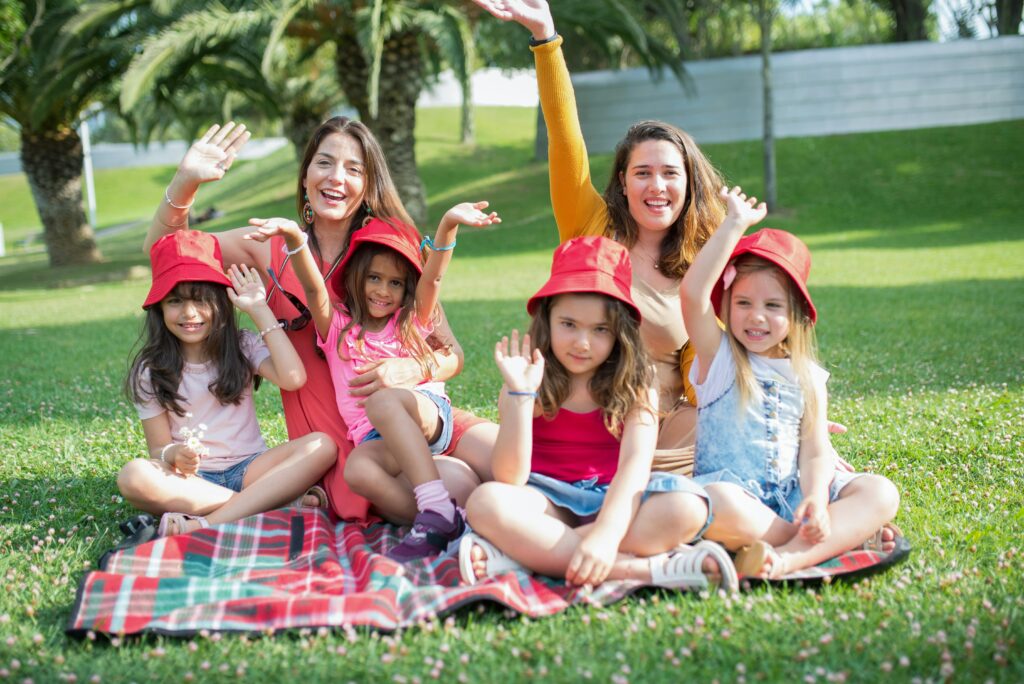
Let’s dive into some best practices for incorporating movement into your daily childcare routine, with a few research-backed nuggets.
- Make Movement a Daily Habit – Kids are naturally wired to move. Studies show that regular physical activity supports motor skills, strengthens muscles and bones, and even helps with cognitive development. For toddlers and preschoolers, aim for at least three hours of active movement spread throughout the day (Centers for Disease Control and Prevention, 2022).
- Tip: Break it up! A mix of light play (like puzzles on the floor), moderate movement (like walking or kicking a ball), and more energetic bursts (like dancing or jumping) is perfect.
- Play-Based Learning Rocks – Ever noticed how kids learn best when they’re having fun? Movement-based play helps them develop coordination, balance, and problem-solving skills. Simple games like Simon Says, obstacle courses, or scavenger hunts can keep them engaged and moving.
- Why it matters: Movement isn’t just physical—it’s linked to brain development. Activities like crawling under furniture or balancing on one foot can boost their spatial awareness and attention span (Harvard Center on the Developing Child, 2021).
- Encourage Free Exploration – While structured activities are great, don’t underestimate the value of letting kids explore their environment. Letting them climb (safely!), run, or roll around helps them build confidence and understand their body’s capabilities.
- Safety First: Ensure the play area is safe—soft flooring, no sharp edges, and plenty of supervision. Bonus points if you can get outside! Nature-based play offers fresh air and adds extra sensory stimulation (Burdette & Whitaker, 2005).
- Incorporate Movement into Everyday Tasks – You don’t always need a “big activity” to encourage movement. Simple tasks like tidying up toys, hopping like a bunny to the bathroom, or marching around while singing can be just as beneficial.
- Pro Tip: Turn chores into challenges! “How many toys can we pick up while skipping?” or “Can you tiptoe to the door without making a sound?”
- Model the Movement You Want to See – Kids are little sponges—they mimic what they see. If you’re enthusiastic about moving, they’ll want to join in. Show them how fun it can be to stretch, dance, or even do yoga. It’s also a sneaky way to sneak in your own exercise!
- Science Backs You Up: Research shows that caregiver involvement in active play boosts a child’s engagement and enjoyment (American Academy of Pediatrics, 2018).
- Balance Movement with Rest – While physical activity is crucial, so is downtime. Young children need plenty of rest to recharge their growing bodies and minds. After active play, wind down with a quiet activity like reading or puzzles.
- Sleep Tip: Consistent movement throughout the day can actually improve sleep quality at night (Ferreira et al., 2021). Win-win!

Final Thought
Movement is magic for little ones—it helps them grow, learn, and connect with the world around them. By making it part of your daily routine, you’re keeping them healthy and building a foundation for lifelong well-being.
So, get up, get moving, and have fun! Your little buddies will thank you with giggles, hugs, and maybe a surprise “I love you.”
References:
- American Academy of Pediatrics. (2018). The importance of play in promoting healthy child development and maintaining strong parent-child bonds. Pediatrics, 142(3), e20182058.
- Burdette, H. L., & Whitaker, R. C. (2005). Resurrecting free play in young children: Looking beyond fitness and fatness to attention, affiliation, and affect. Archives of Pediatrics & Adolescent Medicine, 159(1), 46-50.
- Centers for Disease Control and Prevention. (2022). Physical activity recommendations for young children. Retrieved from https://www.cdc.gov/physicalactivity/basics/children/index.htm
- Ferreira, P. H., Ferreira, M. L., Maher, C. G., Refshauge, K., Latimer, J., & Adams, R. D. (2021). Sleep disturbance and movement behaviors in young children. Journal of Pediatrics, 234, 87-93.
- Harvard Center on the Developing Child. (2021). How movement supports brain development in early childhood. Retrieved from https://developingchild.harvard.edu