
Through play, we build the foundations for discovery. We pave the way for learning to happen innately.
If you’re anything like me (and I have a feeling you are!), you’ve likely imagined a future for your children filled with joy, abundance, exciting adventures, and vibrant health. As parents, it’s only natural—no, it’s our responsibility—to guide them toward reaching their fullest potential.
However, as well-meaning and pure as our intentions may be, this vision often drives us to pack our children’s schedules with countless activities, leaving them little to no time for unstructured play. Even worse, we sometimes convince ourselves that play is trivial or a waste of time. In reality, this might be one of the greatest mistakes we can make as parents. According to the American Academy of Pediatrics (2018), “play is essential to development because it promotes healthy brain development and social skills” (p. 6).

What Is Play
I think we can all agree on a few fundamental aspects of play. First, play is a self-directed activity where participants are actively engaged. It’s fun, often spontaneous, and may involve pretending, role-playing, or re-enacting scenarios. Additionally, play can center around creativity, often leading to joyful discoveries that inspire even more creativity. As children grow older, play can take on a more structured form, incorporating mutually agreed-upon rules and a sense of competition.
According to a 2018 clinical report by the American Academy of Pediatrics, active play is described as ‘a type of gross motor or whole-body movement where young children expend energy in a freely chosen, enjoyable, and unstructured way’ (American Academy of Pediatrics, 2018, p. 3).
The Value & Benefits of Explorative Play
When we give children the freedom to explore, magic happens—they stay engaged, curious, and in charge of their playtime. Unlike structured activities that limit their movements, free play lets kids take the reins and fully immerse themselves in the process. And when they’re actively engaged and calling the shots, real learning takes root!
Physical Strength and Health
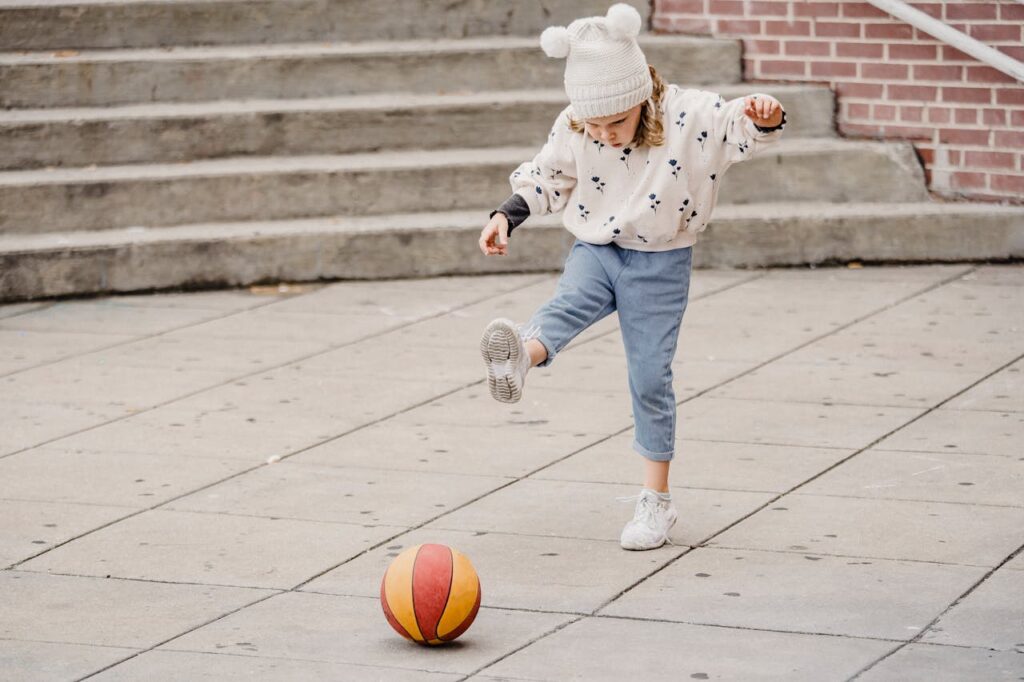
Play isn’t just fun—it’s a powerhouse for growing strong and staying healthy! Through play, kids build physical strength while boosting their balance, coordination, and motor skills. For example, from running and jumping to climbing and dancing, they’re mastering the moves that set the stage for an active, energetic lifestyle. Moreover, all that movement helps keep them on the path to lifelong health, reducing the chances of obesity down the road. Who knew having fun could do so much good? In fact, the American Heart Association (2018) emphasizes that ‘active play is one of the best ways to reduce childhood obesity and foster a lifetime of health’ (p. 2).

The amount of structured and unstructured play that benefits children typically depends on their age. According to a report published by SHAPE America, clear guidelines are provided on this topic: ‘Every day, preschoolers need at least 60 minutes of structured motor activity and 60 minutes or more of unstructured physical activity’ (SHAPE America, 2018, p. 12). In addition, they recommend outdoor time for motor play, supervised by an adult in a safe, child-friendly setting. Furthermore, they emphasize the importance of access to developmentally appropriate equipment to support physical activity and motor skill development (SHAPE America, 2018).
Cognitive Development
Play is the best way for developing cognitive skills in people of all ages, especially in children. It provides opportunities for learning, problem-solving, creativity, and critical thinking in an engaging way. Here’s how play builds cognitive skills:
- Problem-Solving – Pretend Play or Role-playing helps kids learn to navigate social scenarios and solve problems creatively.
- Creativity and Imagination – Open-ended play (like building with LEGO or drawing) allows for experimentation, leading to creative problem-solving and innovative thinking.
- Memory Development – Games with rules (like Simon Says or Memory Match) require kids to remember sequences, rules, or patterns, which strengthens working memory.
- Language & Communication – Social play (like storytelling or collaborative games) enhances vocabulary, comprehension, and conversational skills.
- Executive Functioning – Activities like building towers, playing sports, or even video games often require planning, organizing, and multitasking.
- Attention & Focus – Engaging children in active physical play is a fantastic way to enhance their attention and focus. Incorporating movement into learning activities not only makes them more enjoyable but also stimulates cognitive development.
As noted by Ginsburg (2007), “Play helps children learn to think creatively and critically, which are vital skills for success in the 21st century” (p. 182).
Socio-Emotional Learning
Play is a powerful way to develop socio-emotional skills because it provides opportunities for interaction, self-expression, and navigating relationships in a safe and engaging context. Here’s how play nurtures socio-emotional growth:
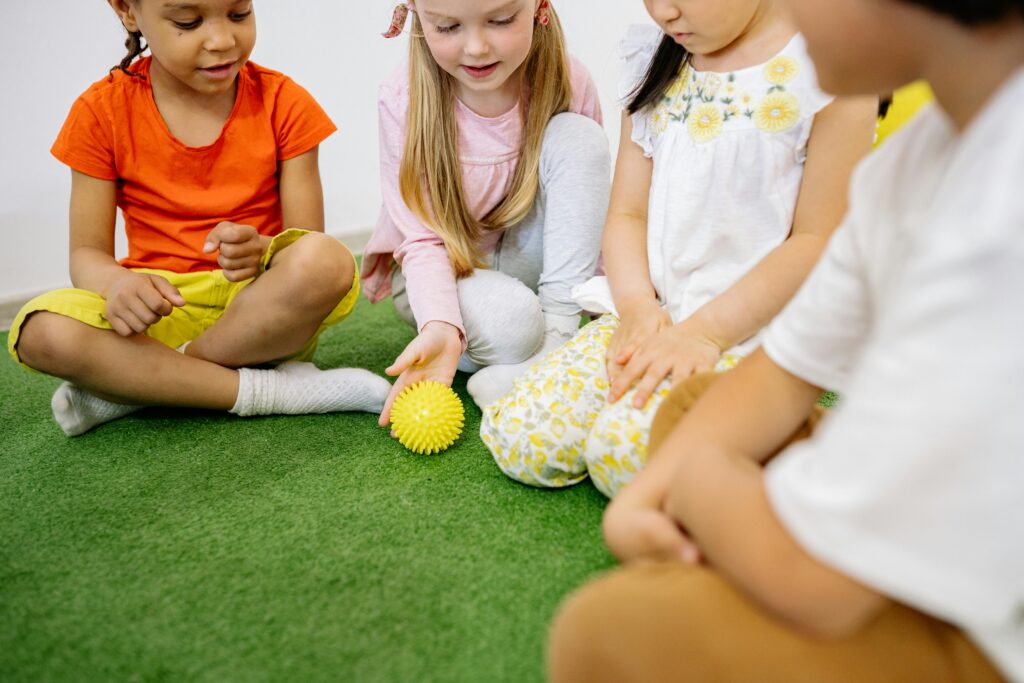
- Learning to share and take turns – Cooperative play fosters teamwork and empathy, which are crucial for social cognition. Children practice patience and fairness while understanding the importance of mutual respect in social settings.
- Building Empathy – Role-Playing and Pretend Play: Playing “house,” acting out scenarios, or pretending to be characters helps children understand other perspectives and emotions. These experiences encourage them to recognize and respond to the feelings of others.
- Managing Emotions – Competitive Games: Games that involve winning and losing help children develop resilience, manage disappointment, and celebrate others’ successes. Through play, children learn how to cope with frustration, regulate their emotions, and persevere.
- Communication – Group Play: Activities like sports or team-based games foster active listening, negotiation, and expressing ideas clearly. Kids learn to articulate their needs while being mindful of the perspectives of their peers.
- Strengthening Self-Confidence – Mastery Through Play: Trying new activities, solving challenges, or completing games boosts self-esteem and fosters a sense of accomplishment. Positive reinforcement during play builds a healthy self-concept.
As the American Academy of Pediatrics (2018) points out, “Through play, children develop the ability to manage emotions, build relationships, and understand other perspectives, which are all fundamental components of emotional intelligence” (p. 7).
By diving into all kinds of play, kids—and even grown-ups—learn how to connect with others, express themselves, and level up their emotional smarts. Play isn’t just fun—it’s a social and emotional super skill in action!
References:
- American Academy of Pediatrics. (2018). The Importance of Play in Promoting Healthy Child Development and Maintaining Strong Parent-Child Bonds. Pediatrics, 142(3), e20182058. https://doi.org/10.1542/peds.2018-2058
- Ginsburg, K. R. (2007). The Importance of Play in Promoting Healthy Child Development and Maintaining Strong Parent-Child Bonds. Pediatrics, 119(1), 182-191. https://doi.org/10.1542/peds.2006-2697
- SHAPE America. (2018). Active Start: A Statement of Physical Activity Guidelines for Children From Birth to Age 5. Society of Health and Physical Educators. Retrieved from https://www.shapeamerica.org
- American Heart Association. (2018). Physical Activity and Children. Retrieved from https://www.heart.org
Hi Amy @ALMP!
Thank you for explaining how play impacts a child’s development. My 7 year old loves physical play but we had him in our 40s and we cannot cope with his level of energy. Any suggestions as to what kind of play we can all do together?
More power, Amy 🙂
Hello, Stefani!
First off—thank you for sharing this! You’re not alone. Many parents tell me that keeping up with their child’s endless energy can feel like running a marathon (without the training plan). The good news is that physical play doesn’t always have to mean full-speed running or high-intensity games. With a few small shifts, you can create playful moments that keep your 7-year-old engaged and work at a pace you can enjoy too. Love to B and T!
Here’s a post with a few family-friendly play ideas that blend fun, connection, and movement,
How to Support Your 6–12 Year Old’s Need for Play