
Let’s talk about play—a kid’s favorite way to learn, grow, and have fun. As adults, we often focus on structured activities like sports or dance classes, but guess what? That’s only half the story. Unstructured play, like free exploring and just being a kid, is just as important for healthy development. In this post, we’ll explore the benefits of structured and unstructured movement-based play for different age groups and why combining both is key to helping your little ones thrive.
Structured vs. Unstructured Play: What’s the Difference?
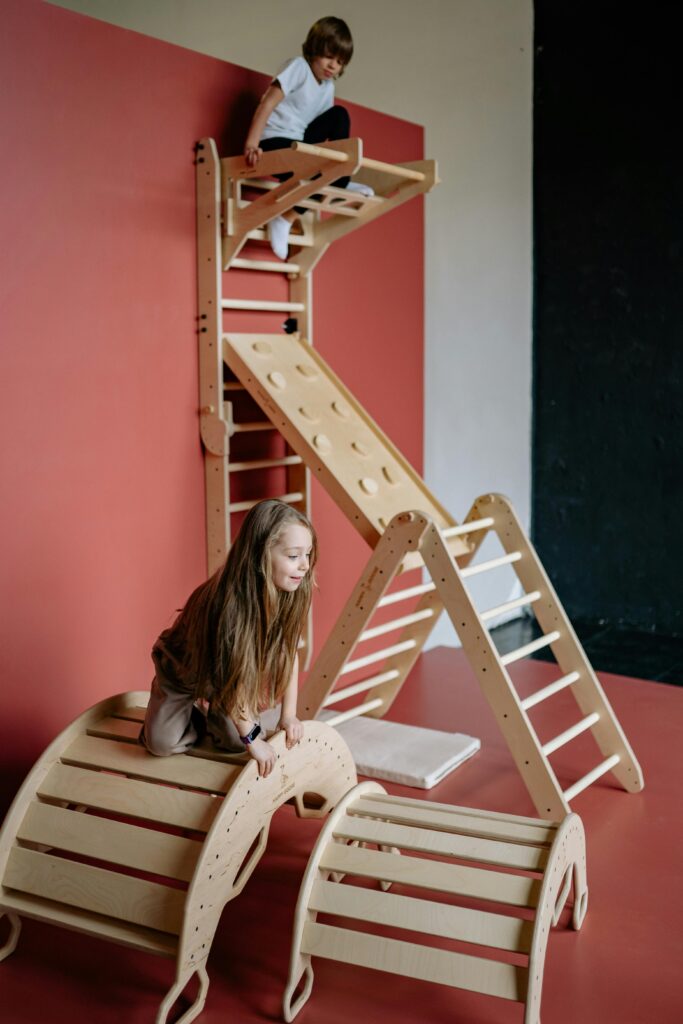
Structured play refers to planned, organized activities with a clear goal or set of rules. For example, sports, dance, martial arts, or even an obstacle course you set up at home all fall into this category (Ginsburg, 2007).
On the other hand, unstructured play is open-ended. This is when kids make the rules, follow their curiosity, and let their imaginations run wild. Whether they’re climbing a tree, building a pillow fort, or playing tag, it’s all about creativity and spontaneity (American Academy of Pediatrics, 2018).
Why Both Types of Play Are Crucial
Kids need a balance of structured and unstructured play because each type offers unique benefits for physical, emotional, and social development. For instance, structured play builds important skills like discipline, coordination, and teamwork (Burdette & Whitaker, 2005). Meanwhile, unstructured play fosters creativity, problem-solving, and independence (Gray, 2011).
By blending both types of play into your child’s routine, you’re giving them the best of both worlds—helping them grow into confident, creative, and well-rounded little humans.
Benefits of Guided and Free Play by Age Group
| Structured or Guided Play | Unstructured or Free Play | |
| Infants (0-12 months) | Gentle tummy time and guided stretches help babies strengthen their muscles and develop motor skills (CDC, 2022). | Letting them explore freely on a play mat or safely crawl around encourages curiosity and enhances their spatial awareness. Tip: Keep it simple—soft toys, mirrors, and colorful objects are perfect for movement-based exploration. |
| Toddlers (1-3 years) | Movement games like “Follow the Leader” or baby gym classes are great for building coordination and balance (Santrock, 2019). | Toddlers thrive on free exploration, whether it’s running in the backyard, stacking blocks, or splashing in puddles. Why it matters: Unstructured play at this age builds confidence, while structured activities introduce social skills like taking turns (Pellegrini & Smith, 1998). |
| Preschoolers (3-5 years) | This is a great age to introduce activities like dance, beginner sports, or yoga. These help refine motor skills and teach kids how to follow directions. | Encourage pretend play and outdoor adventures. Let them climb, dig, or create imaginary worlds with friends. Fact: Outdoor free play enhances problem-solving and critical thinking skills (Harvard Center on the Developing Child, 2018). |
| School-age kids (6-12 years) | Team sports, swimming lessons, or organized games help kids develop teamwork, leadership, and perseverance (Côté & Hancock, 2016). | Let them invent their own games, ride bikes with friends, or just “hang out” outside. Pro Tip: Balancing structured activities with free time prevents burnout and encourages self-directed learning (Gray, 2013). |
The Magic of Balance
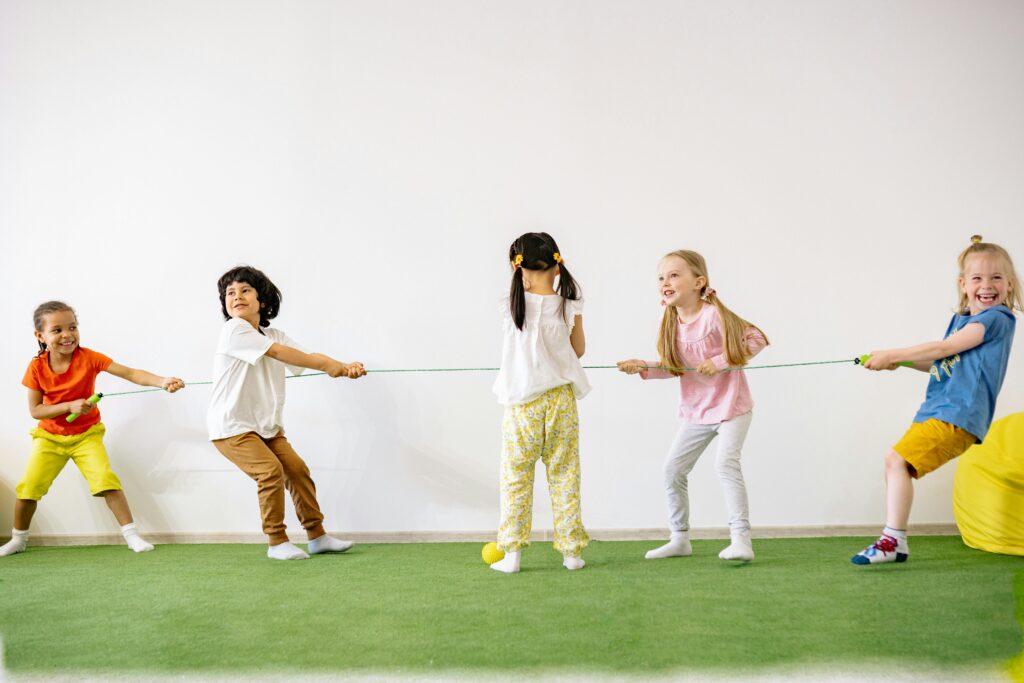
Finding the right mix of structured and unstructured movement doesn’t have to be complicated. In fact, a balanced approach can be both simple and fun. Here’s a quick guide to help:
- Be Flexible: Every day is different. Some days, your child might crave more free play, while other times, they may benefit from structured guidance.
- Prioritize Variety: A well-rounded mix of indoor and outdoor activities, calm and active moments, and solo and group play keeps things fresh and engaging.
- Follow Their Interests: Pay attention to what excites your child. For example, if they love building, encourage them to construct elaborate Lego towers (unstructured) or enroll them in a robotics class (structured).
Final Thought
At the end of the day, whether it’s soccer practice or an afternoon of playing pirates in the backyard, both structured and unstructured movement-based play are essential for your child’s growth. As a caregiver or parent, you’re not just helping them stay active—you’re laying the foundation for a lifetime of learning, creativity, and joy.
So, the next time your child asks to “play a game” or “just run around,” go ahead and say yes! Because that’s where the magic happens.
Got any tips or favorite activities for blending structured and unstructured play? Drop them in the comments below—we’d love to hear your ideas!
References:
- American Academy of Pediatrics. (2018). The importance of play in promoting healthy child development and maintaining strong parent-child bonds. Pediatrics, 142(3), e20182058.
- Burdette, H. L., & Whitaker, R. C. (2005). Resurrecting free play in young children: Looking beyond fitness and fatness to attention, affiliation, and affect. Archives of Pediatrics & Adolescent Medicine, 159(1), 46-50.
- CDC. (2022). Physical activity guidelines for Americans. U.S. Department of Health and Human Services.
- Côté, J., & Hancock, D. J. (2016). Evidence-based policies for youth sport programs. International Journal of Sport Policy and Politics, 8(1), 51-65.
- Ginsburg, K. R. (2007). The importance of play in promoting healthy child development and maintaining strong parent-child bonds. Pediatrics, 119(1), 182-191.
- Gray, P. (2011). The decline of play and the rise of psychopathology in children and adolescents. American Journal of Play, 3(4), 443-463.
- Gray, P. (2013). Free to learn: Why unleashing the instinct to play will make our children happier, more self-reliant, and better students for life. Basic Books.
- Harvard Center on the Developing Child. (2018). Enhancing and practicing executive function skills with children from infancy to adolescence.
- Pellegrini, A. D., & Smith, P. K. (1998). Physical activity play: The nature and function of a neglected aspect of play. Child Development, 69(3), 577-598.
- Santrock, J. W. (2019). Life-span development (17th ed.). McGraw-Hill Education.