
When we think about learning, it’s easy to picture kids sitting quietly at desks, solving math problems or reading books. And while there is nothing wrong with that, what many people might not realize is that learning doesn’t always happen while sitting still. In fact, movement plays a huge role in how kids learn and process the world around them. Movement-based learning isn’t just about staying active; it can be a powerful way to support brain development and make learning fun and engaging. Let’s explore how moving their bodies helps kids grow their minds.
The Science Behind Movement and Cognitive Development
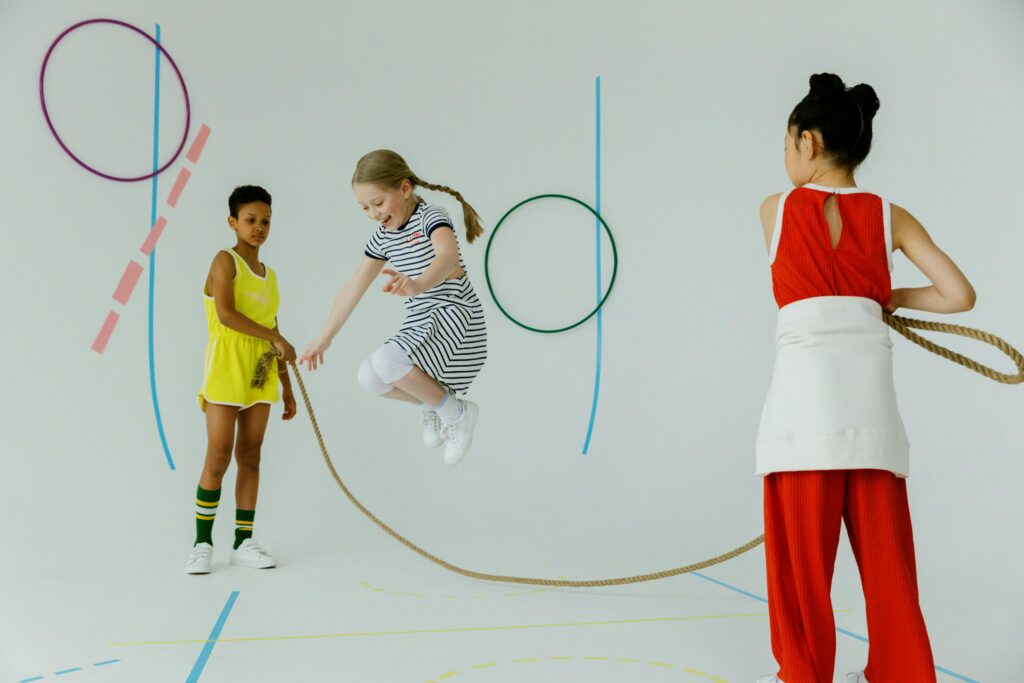
Our brains and bodies are deeply connected, and movement is a big part of that. When kids move, their bodies release something called brain-derived neurotrophic factor (BDNF). Think of BDNF as “brain fertilizer”—it helps brain cells grow and communicate better, which boosts memory, focus, and learning (Ratey & Loehr, 2011). Research suggests that active kids may develop better problem-solving skills, stay focused longer, and perform better in school (Sibley & Etnier, 2003).
Movement also activates a part of the brain called the cerebellum, which doesn’t just handle coordination but also helps with attention, language, and spatial skills (Diamond, 2000). Activities that combine physical effort with thinking—like dancing or navigating an obstacle course—stimulate these brain connections, building skills like working memory and self-control (Best, 2010).
How Movement-Based Learning Boosts Cognitive Skills
Let’s break down how moving their bodies can help kids’ brains thrive:
- Improves Memory and Retention When kids engage multiple senses, like clapping while singing a song, they’re creating stronger brain connections. The more senses are involved, the easier it is for them to remember (Shams & Seitz, 2008).
- Enhances Focus and Attention Physical activity gets the blood flowing to the brain, delivering oxygen and nutrients that sharpen focus (Hillman, Erickson, & Kramer, 2008). Even a quick stretch or dance break can help kids reset and stay engaged. Not a bad idea for adults to try, too!
- Builds Problem-Solving Skills Ever watched kids figure out how to climb a jungle gym or solve a scavenger hunt clue? Activities like these encourage them to think critically, strategize, and adapt—all while having fun (Pellegrini & Smith, 1998).
- Boosts Creativity Creative movement, like acting out a story or inventing a new dance, encourages kids to use their imagination. It’s a fun way for them to express themselves and think outside the box (Lakes & Hoyt, 2004).
Easy Ways to Add Movement to Learning
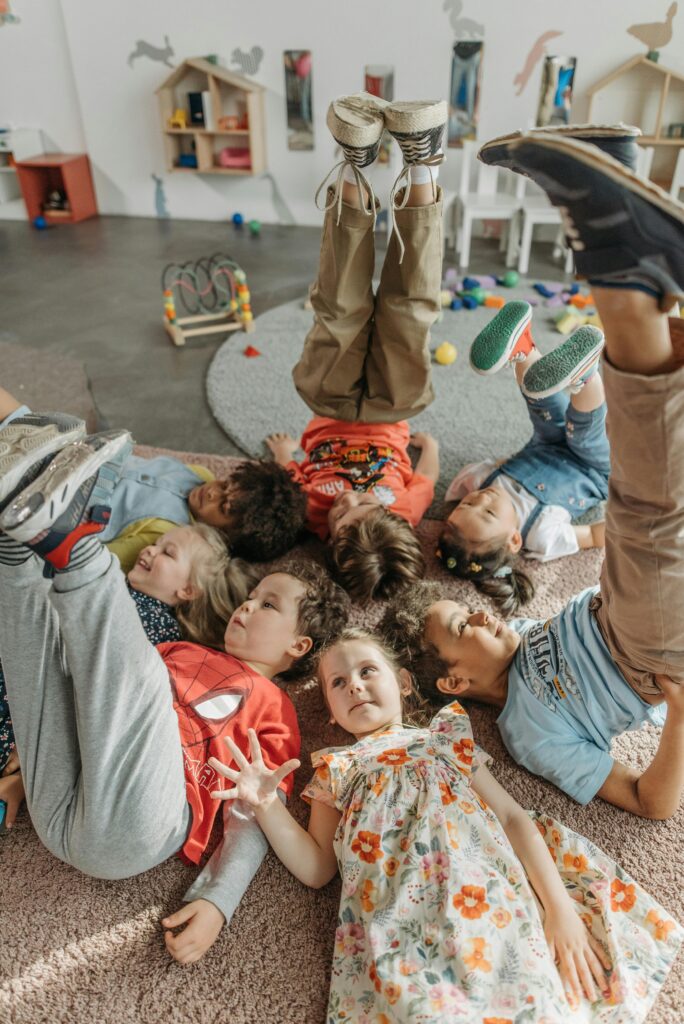
Adding movement to your child’s learning routine doesn’t have to feel complicated. Here are some simple and fun ideas:
- Action Songs and Rhymes Songs like “Head, Shoulders, Knees, and Toes” get kids moving and learning at the same time. These activities help with body awareness and memory (Gardner, 1983).
- Brain Gym Exercises Movements like touching your right hand to your left knee cross the midline of the body, activating both sides of the brain and improving coordination (Dennison & Dennison, 1994).
- Interactive Storytelling Act out stories together! If the character climbs a hill, have your child pretend to climb too. It makes the story come alive and helps with comprehension (Nicolopoulou, 2010).
- Learning Through Dance Turn lessons into dance routines. For example, jumping could represent addition, and crouching could represent subtraction. This makes abstract concepts more concrete and fun (Hanna, 2008).
- Nature Walks with a Twist Take a walk and turn it into a learning adventure! Count your steps, spot shapes in nature, and talk about the plants and animals you encounter. Combining movement with curiosity enhances cognitive development—and from my own experience, these moments become cherished memories (Wells & Evans, 2003).
Why Movement Matters for Lifelong Learning
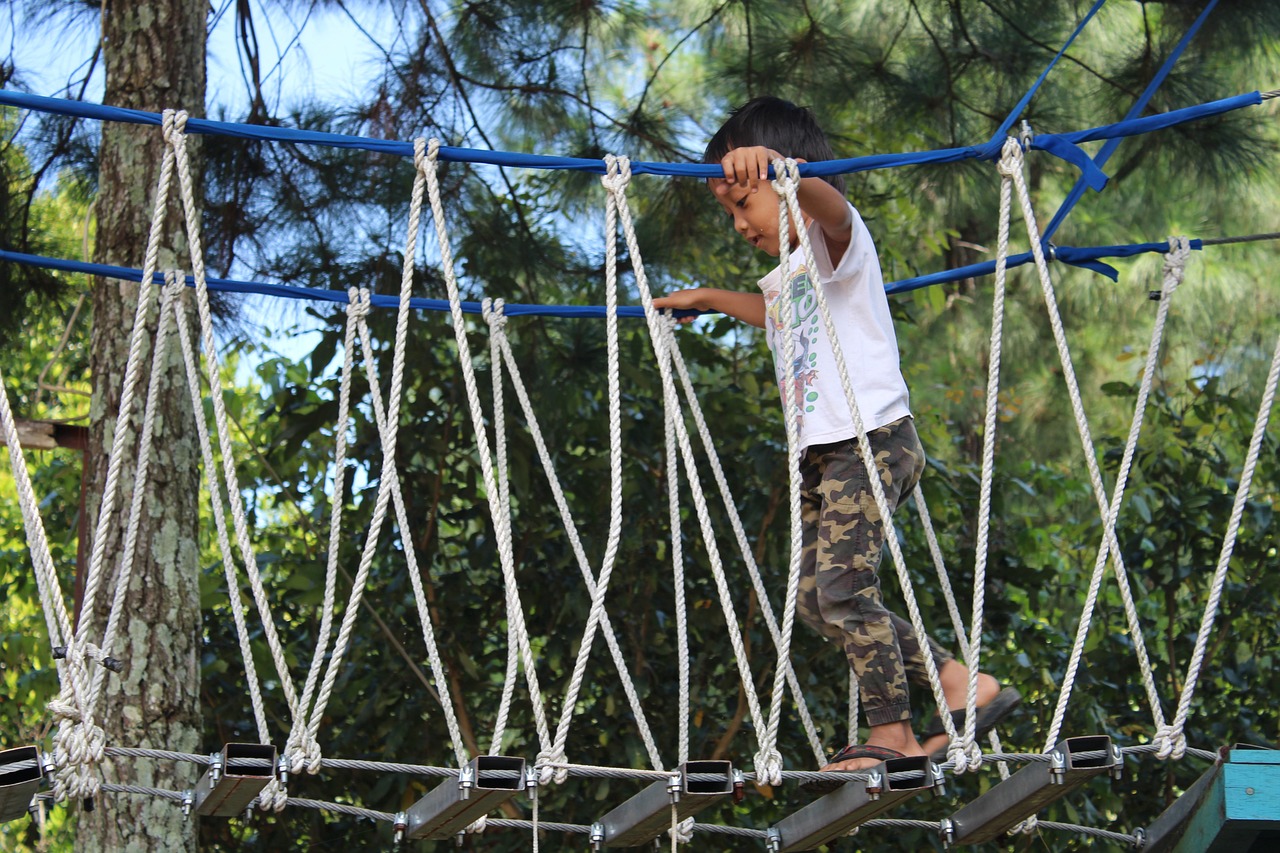
The best part? Movement-based learning doesn’t stop being helpful when kids grow up. Adults who stay active also experience better focus, less stress, and improved memory (Erickson et al., 2011). By encouraging kids to love moving their bodies now, we’re helping them build a foundation for lifelong learning and well-being.
Final Thoughts
Movement isn’t just something kids do to burn off energy—it’s a vital part of how they learn and grow. From dancing to storytelling to outdoor adventures, adding movement to everyday activities can unlock incredible benefits for their developing brains. The more we understand this connection, the more we can help our children thrive.
So, let’s get moving—because when kids move, they’re not just exercising their bodies; they’re growing their minds too.
References:
- Best, J. R. (2010). Effects of physical activity on children’s executive function: Contributions of experimental research on aerobic exercise. Developmental Review, 30(4), 331-351.
- Dennison, P. E., & Dennison, G. (1994). Brain Gym: Teacher’s Edition. Ventura, CA: Edu-Kinesthetics, Inc.
- Diamond, A. (2000). Close interrelation of motor development and cognitive development and of the cerebellum and prefrontal cortex. Child Development, 71(1), 44-56.
- Erickson, K. I., et al. (2011). Exercise training increases size of hippocampus and improves memory. PNAS, 108(7), 3017-3022.
- Gardner, H. (1983). Frames of Mind: The Theory of Multiple Intelligences. New York: Basic Books.
- Hanna, J. L. (2008). A nonverbal language for imagining and learning: Dance education in K-12 curriculum. Educational Researcher, 37(8), 491-506.
- Hillman, C. H., Erickson, K. I., & Kramer, A. F. (2008). Be smart, exercise your heart: Exercise effects on brain and cognition. Nature Reviews Neuroscience, 9(1), 58-65.
- Lakes, K. D., & Hoyt, W. T. (2004). Promoting self-regulation through school-based martial arts training. Journal of Applied Developmental Psychology, 25(3), 283-302.
- Nicolopoulou, A. (2010). The interplay of play and narrative in children’s development: Theoretical reflections and concrete examples. Cognitive Development, 25(1), 55-79.
- Pellegrini, A. D., & Smith, P. K. (1998). Physical activity play: The nature and function of a neglected aspect of play. Child Development, 69(3), 577-598.
- Ratey, J. J., & Loehr, J. E. (2011). Spark: The Revolutionary New Science of Exercise and the Brain. New York: Little, Brown.
- Shams, L., & Seitz, A. R. (2008). Benefits of multisensory learning. Trends in Cognitive Sciences, 12(11), 411-417.
- Sibley, B. A., & Etnier, J. L. (2003). The relationship between physical activity and cognition in children. Pediatric Exercise Science, 15(3), 243-256.
- Wells, N. M., & Evans, G. W. (2003). Nearby nature: A buffer of life stress among rural children. Environment and Behavior, 35(3), 311-330.