
When was the last time you watched kids running around a playground or engaging in an energetic game of tag? Beyond the laughter and excitement, there’s a lot more happening than meets the eye. Active play isn’t just about expending energy; it’s a key driver for developing social and life skills. Let’s dive into why this form of play is crucial for children and how it lays the foundation for success in life.
Why Movement-Based Active Play Matters
Active play—the kind that gets kids moving, laughing, and interacting—is more than just fun. It helps children learn essential skills they’ll use for the rest of their lives. Here are some key ways movement-based play fosters social development:
- Teamwork and Collaboration Think about games like soccer, capture the flag, or even an old-fashioned game of hide-and-seek. These activities naturally encourage kids to work together, communicate, and strategize. They learn how to compromise, take turns, and appreciate the value of working toward a common goal (Pellegrini & Smith, 1998).
- Problem-Solving Skills Movement-based games often come with challenges—whether it’s figuring out how to climb a tricky obstacle or deciding the best way to win a game. These moments teach kids how to think critically, adapt to new situations, and come up with creative solutions (Ginsburg, 2007).
- Empathy and Social Awareness During active play, children encounter a range of emotions—both their own and those of others. Whether it’s comforting a friend who’s fallen or negotiating a rule disagreement, kids practice empathy and learn how to navigate social dynamics (Jones & Bouffard, 2012).
- Leadership and Responsibility Taking charge during a game or ensuring everyone follows the rules helps children build confidence and leadership skills. They learn responsibility by taking on roles that contribute to the group’s success (Barker et al., 2014).
Life Skills Built Through Movement-Based Play
In addition to social skills, active play sets the stage for developing crucial life skills:
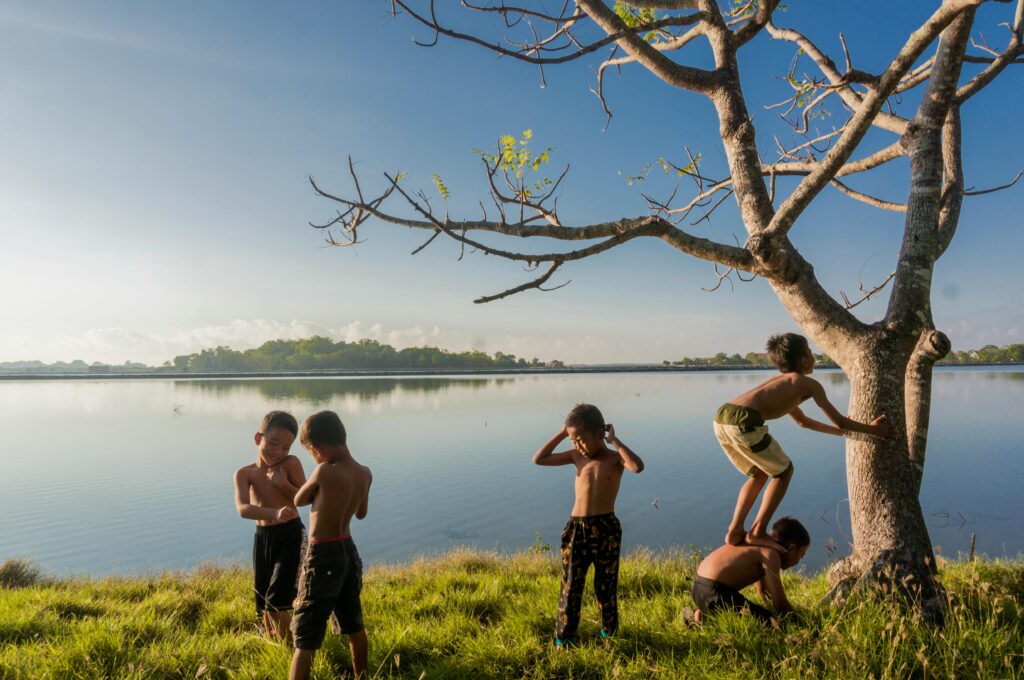
Healthy Risk-Taking: Climbing, jumping, or trying a new sport teaches children how to assess risks and build confidence in their abilities (Sandseter, 2009).
Resilience: Physical activities often come with setbacks, like falling during a game or losing a match. These moments teach kids to bounce back and try again (Dweck, 2006).
Time Management: Organized play often requires kids to follow schedules, such as showing up for team practice or adhering to a set playtime (Côté & Hancock, 2016).
How Parents and Educators Can Encourage Active Play
If you’re wondering how to help kids get the most out of movement-based play, here are a few tips:
- Prioritize Unstructured Play: While organized sports are great, don’t overlook the importance of free play where kids set their own rules.
- Create Opportunities: Offer access to playgrounds, sports, or even simple backyard games.
- Be a Role Model: Join in! Show kids how much fun movement can be.
Movement-Based Play and Lifelong Benefits
The beauty of movement-based play is that its benefits don’t stop in childhood. The skills kids learn—collaboration, problem-solving, empathy—become the foundation for navigating adulthood. Whether it’s in the workplace, in relationships, or in their communities, these skills are invaluable (Louv, 2008).
Final Thoughts
Next time you see kids playing a game of tag or racing each other to the jungle gym, remember this: they’re doing much more than having fun. They’re building the social and life skills they’ll use for years to come. So encourage active play every chance you get—because when kids move, they’re learning, growing, and preparing for life.
References
- Barker, J. E., Semenov, A. D., Michaelson, L., Provan, L. S., Snyder, H. R., & Munakata, Y. (2014). Executive function in childhood. Psychological Science, 25(5), 1044-1053.
- Côté, J., & Hancock, D. J. (2016). Evidence-based policies for youth sport programs. International Journal of Sport Policy and Politics, 8(1), 51-65.
- Dweck, C. S. (2006). Mindset: The new psychology of success. Random House.
- Ginsburg, K. R. (2007). The importance of play in promoting healthy child development and maintaining strong parent-child bonds. Pediatrics, 119(1), 182-191.
- Jones, S. M., & Bouffard, S. M. (2012). Social and emotional learning in schools. Social Policy Report, 26(4), 1-33.
- Louv, R. (2008). Last child in the woods: Saving our children from nature-deficit disorder. Algonquin Books.
- Pellegrini, A. D., & Smith, P. K. (1998). Physical activity play: The nature and function of a neglected aspect of play. Child Development, 69(3), 577-598.
- Sandseter, E. B. H. (2009). Risky play and risk management in Norwegian preschools. Safety Science Monitor, 13(1), 1-12.
Hi Amy,
The ideas in this article are so true and realistic. Let the kids play, explore, and discover the world.
If I have a second chance, I’ll follow your advice. You and I know the issues of overprotecting
the children.
Thank you so much for sharing this heartfelt comment. You’re absolutely right — when we step back and give children space to play, explore, and discover, we give them the tools to grow confident, curious, and resilient. Overprotection often comes from love, but as you said, it can sometimes hold them back from the very experiences that help them thrive.
The beautiful thing is—it’s never too late to embrace play. Whether with our own children, grandchildren, or even in the way we engage with the world ourselves, choosing to play and let go a little brings joy at every age. 💛