
As parents, it’s natural to cheer when our babies hit the “big” milestones — that first step, first word, first solid food. Crawling? It often gets lumped into a short-lived in-between stage. A little messy, maybe even optional. But here’s the truth: crawling is one of the most important developmental milestones in early childhood — not just a phase to breeze through.
Crawling Builds the Brain-Body Connection
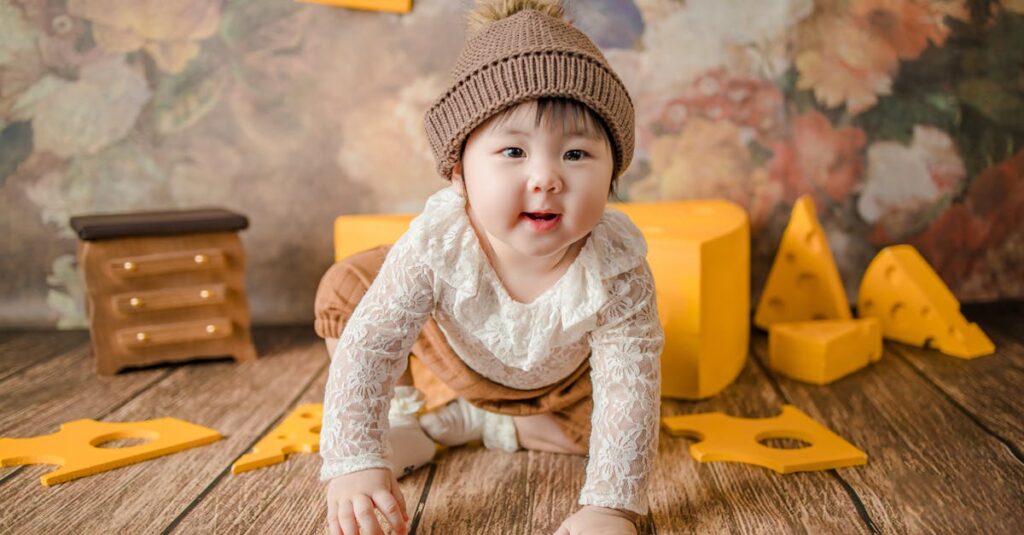
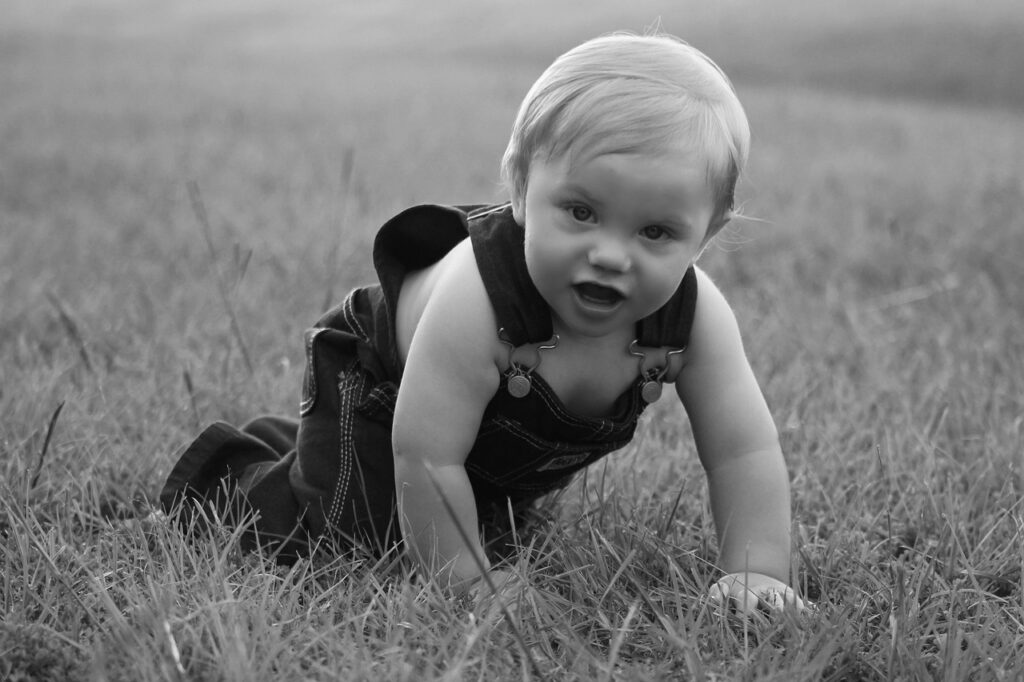
When babies crawl, it may look like simple movement, but underneath the surface, something powerful is happening. Crawling involves cross-lateral movement — using opposite sides of the body in rhythm (like right arm/left leg, then left arm/right leg). This action helps integrate the left and right hemispheres of the brain, which supports everything from coordination and balance to later reading and writing skills (Goddard Blythe, 2005).
This is the same brain connection that eventually allows a child to track words across a page, write smoothly, or even ride a bike. All from that adorable rock-and-roll crawl across the room.
It’s Not Just About Movement — It’s About Mastery
Crawling strengthens a baby’s:
- Core muscles
- Shoulder stability
- Wrist and hand development
- Visual tracking and depth perception
These are foundational for future skills like sitting upright at a desk, holding a pencil, or safely navigating stairs.
Skipping or rushing through crawling can sometimes impact how smoothly these later skills develop (Kisby, 2020). That’s why it’s okay — even beneficial — for babies to crawl for longer than we expect. There’s no developmental medal for walking early. In fact, extended crawling can be a sign of healthy motor and neural development.
But What If My Baby Skipped Crawling?
First — take a deep breath. ❤️
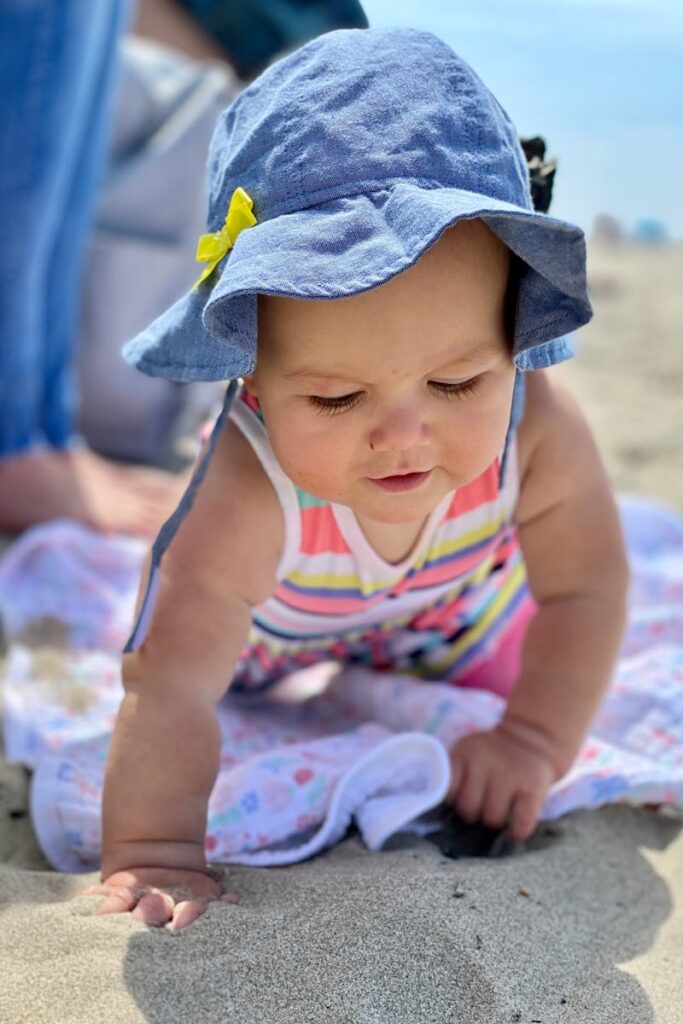
Some babies walk before they ever crawl. Others scoot, roll, or bottom-shuffle their way through the world — and that can be completely normal, too.
Research shows that developmental variability is part of the process, and skipping crawling doesn’t necessarily indicate a problem if a child is meeting other milestones (Darrah et al., 2003; AAP, 2013).
In fact, in some cultures, crawling is uncommon due to different caregiving environments — yet babies still grow into strong, coordinated, and capable children (Adolph et al., 2011). What matters most is that your child is moving, exploring, and gaining strength, coordination, and confidence in their own way.
That said, if you have concerns about your child’s motor development, balance, or coordination, it’s always okay to check in with a pediatrician or pediatric occupational therapist.
Trust Their Timeline
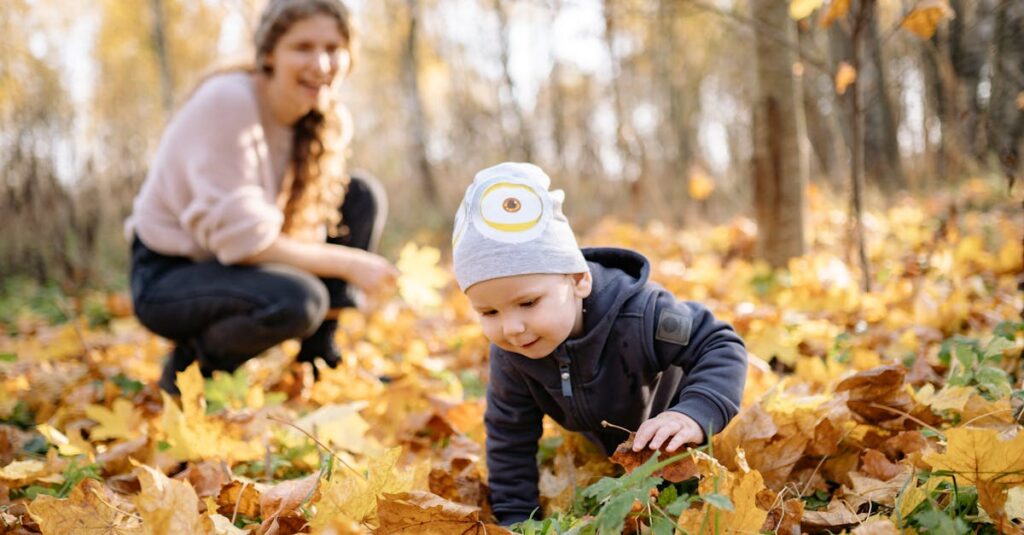
Sometimes in our eagerness to see progress, we unintentionally push babies to stand or walk before they’re ready. But development is not a race — it’s a layering process. Crawling gives your little one time to build the motor planning, coordination, and strength they’ll need to feel confident in upright movement.
If your baby loves crawling — let them! If they’re not quite there yet, give them opportunities to explore the floor with as much tummy time and encouragement as you can. Development happens in motion, not in milestones alone.
Tip of the day:
Create more floor-time opportunities.
Lay out a soft mat, some safe toys, and just let them explore. No need for fancy gadgets — your baby’s body is their best teacher.
Celebrate the Crawl (And Every Other Way They Move)
So the next time your baby launches into their signature belly wiggle or four-point sprint, pause and smile. They’re not “just crawling.” They’re developing neural pathways, building physical strength, and learning how to move with purpose.
And if your little one skipped crawling entirely and wobbled straight into walking? That’s okay too — keep cheering them on. Watch how they learn to climb, balance, build, dance, and move in their own beautifully unique way.
Crawling is a milestone worth celebrating — but in every case, what matters most is connection, movement, and trust in their journey.
References
- Goddard Blythe, S. (2005). The Well Balanced Child: Movement and Early Learning. Hawthorn Press.
- Kisby, C. (2020). Babies’ motor milestones and sensory integration: The importance of crawling. The OT Toolbox.
- Ayres, A. J. (2005). Sensory Integration and the Child. Western Psychological Services.
- Casey, M. B., Pezaris, E., & Nuttall, R. L. (2002). Spatial ability as a predictor of math achievement: The importance of crawling. Developmental Psychology, 38(3), 413–420.
- Darrah, J., Hodge, M., Magill-Evans, J., & Kembhavi, G. (2003). Stability of serial assessments of motor and communication abilities in typically developing infants. Pediatric Physical Therapy, 15(3), 119–125.
- Adolph, K. E., Karasik, L. B., & Tamis-LeMonda, C. S. (2011). Motor skill. In The Wiley-Blackwell Handbook of Childhood Cognitive Development (2nd ed., pp. 61–88).
- American Academy of Pediatrics. (2013). Caring for Your Baby and Young Child: Birth to Age 5.