
If there’s one thing kids love, it’s play. And if there’s one thing that can make play even more magical, it’s music. In fact, play-based learning through music combines the best of both worlds, offering an exciting way for children to develop cognitive, social, emotional, and physical skills—all while having a blast. Now, let’s dive into why this method is so powerful and how you can easily incorporate it into your child’s or classroom’s daily life.
Why Music and Play Go Hand-in-Hand
Music is inherently playful. It’s about rhythm, sound, and movement, which are all things kids naturally gravitate toward. When you add a layer of structured play—like games, storytelling, or creative movement—you’re opening the door to a world of learning opportunities.
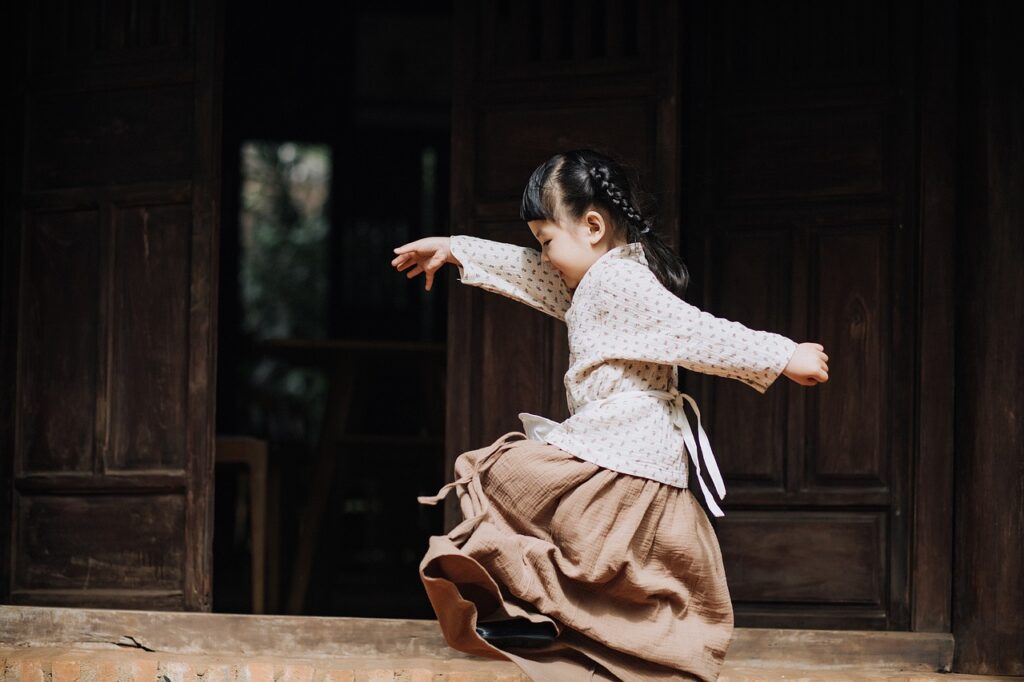
Here’s what makes play-based learning through music so impactful:
- Boosting Brainpower – Music is like a workout for the brain. Whether it’s singing along to a favourite tune or playing with simple instruments, kids are:
- Recognizing Patterns: Songs with repetitive rhythms and melodies help children develop pattern recognition—a key skill for math and language development.
- Building Memory: Learning lyrics or dance routines strengthens memory and recall.
- Encouraging Problem-Solving: Activities like composing simple melodies or experimenting with instruments encourage creative thinking and decision-making.
- Encouraging Emotional and Social Growth – Music has a unique way of fostering connection and self-expression:
- Teamwork: Singing rounds or playing instruments in a group teaches kids how to collaborate and listen to others.
- Emotional Expression: Music provides a safe outlet for kids to express their feelings, whether they’re clapping out excitement or swaying to a calming tune.
- Building Confidence: Performing even a simple song can help kids feel accomplished and proud of themselves.
- Helping With Physical Development – Music gets kids moving, which is great for their physical health and motor skills:
- Gross Motor Skills: Dancing, jumping, or marching to a beat strengthens coordination and balance.
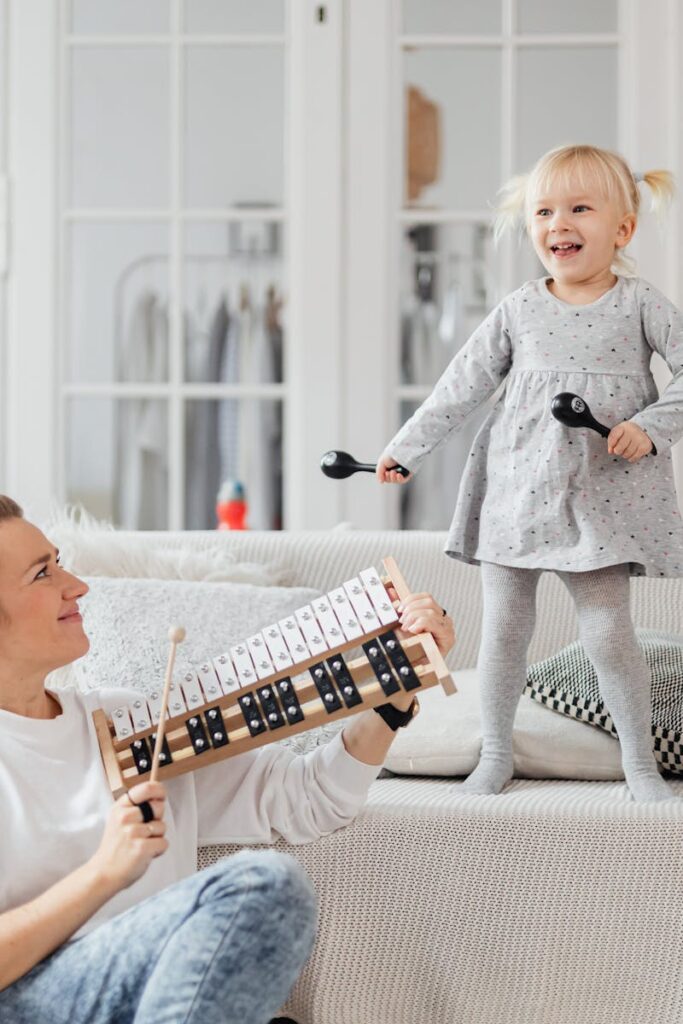
- Fine Motor Skills: Playing instruments like tambourines, xylophones, or even DIY shakers hones precision and control.
- Supporting Language Development – Music is a language all its own, but it also supports kids as they learn to use words:
- Expanding Vocabulary: Songs introduce kids to new words and phrases in a fun, memorable way.
- Phonemic Awareness: Rhymes and chants help kids recognize the sounds of language.
- Fostering Storytelling: Musical activities often include narratives, sparking imagination and comprehension skills.
How to Make Music Play-Based Learning Happen
You don’t need to be a music teacher to incorporate play-based learning through music into your daily routine. Here are a few simple (but super effective) ideas to try:
- Musical Story Time
- Freeze Dance
- Instrument Exploration
- Call and Response Songs
- DIY Instrument Crafting
Why It Works
So, why does play-based learning through music work so well? The answer is simple: it’s fun. When kids are engaged and having a good time, they’re naturally more open to learning. Additionally, music activates multiple areas of the brain, making it a multisensory experience that’s hard to forget.
By combining play and music, you’re creating an environment where kids feel safe to explore, experiment, and grow. Ultimately, it’s the perfect recipe for building lifelong skills while creating joyful memories.
Now, are you ready to add a little more music and a lot more fun to your play-based learning adventures? Let the rhythm guide you—you’ll be amazed at the magic it create
References:
- Bilhartz, T. D., Bruhn, R. A., & Olson, J. E. (1999). The effect of early music training on child cognitive development. Journal of Applied Developmental Psychology, 20(4), 615-636.
- Campbell, P. S., & Scott-Kassner, C. (2019). Music in childhood: From preschool through the elementary grades.Cengage Learning.
- Dissanayake, E. (2000). Antecedents of the temporal arts in early mother-infant interaction. Rhythm, musical narrative, and the origins of human communication, 389-404.
- Gallahue, D. L., & Donnelly, F. C. (2003). Developmental physical education for all children. Human Kinetics.
- Goswami, U. (2001). Early phonological development and the acquisition of literacy. Handbook of early literacy research, 1, 111-125.
- Hallam, S. (2010). The power of music: Its impact on the intellectual, social and personal development of children and young people. International Journal of Music Education, 28(3), 269-289.
- Hanna-Pladdy, B., & Mackay, A. (2011). The relation between instrumental musical activity and cognitive aging. Neuropsychology, 25(3), 378.
- Koops, L. H. (2014). The enjoyment cycle. Music Educators Journal, 101(2), 45-51.
- Mora, J. K. (2000). Foreign language acquisition and melody metaphor. Georgetown University Press.